



Ada Adu Rączka
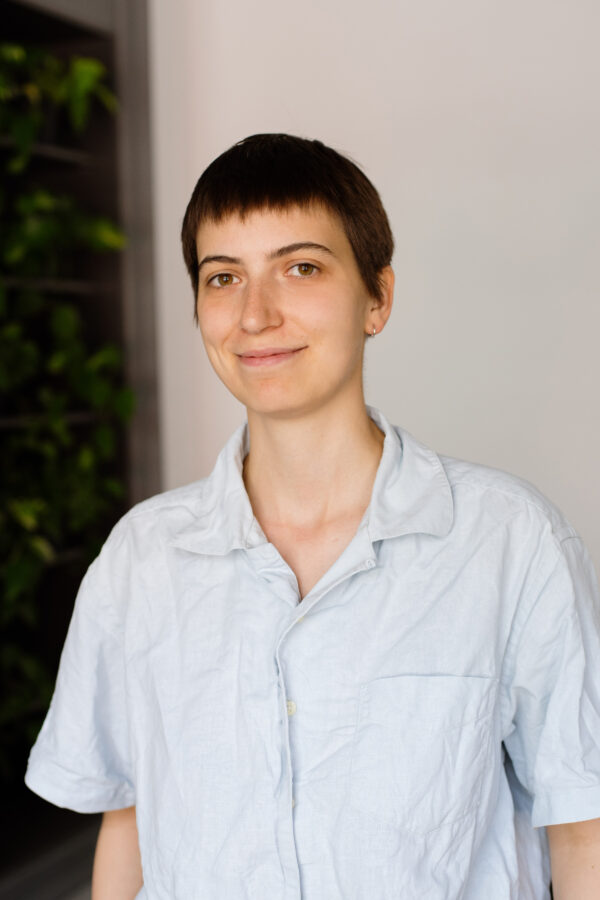
I am applying for the programme because I need substantive, strategic and financial support. On a daily basis, I combine artistic work with teaching at school and running workshops. I incorporate visual and literary elements into my work. I alternate individual projects with participation in collectives (primarily in Plenum Osób Opiekujących Się [Plenum of Caregivers]). As a non-binary person, I also explore the space “in between” in terms of expression, language and identity. I see this year’s residency as an opportunity to share everyday survival practices, in a mundane sense. Counteracting burnout. Strengthening oneself in and outside of creativity, learning to sustain oneself and others.
During the residency programme, I want to focus on calm reflection on how I can use my resources without “using them up” completely. I also intend to consider the possibilities of combining professional work and individual artistic practice with involvement in a collective, in other words, to look at my current pattern of functioning. In short, I want to address the question: how to continue working without burning out? I am looking forward to sharing experiences (and strategies!) with the other participants and 1:1 meetings with the programme leaders.
Graduate of Fine Arts at Städelschule in Frankfurt am Main. I work with images, text and video. I combine poetry with images, handwriting and drawing with digital processing. I am the author of the poetry books Nie róbmy nic, błagam. Ale powiedzmy innym, że robiłyśmy (2019) [Let’s Not Do Anything, I Beg You. But Let’s Tell Others That We Did], Chciałośmy (2022) and Byłobyśbyło (2024), as well as the zine Próba wyjścia z brzucha | Próba wejścia do brzucha (2021) [Attempt to leave the womb | Attempt to reenter the womb], created with Zofka Kofta and Girls and Queers to the Front collective. I am a member of the Plenum Osób Opiekujących Się [Plenum of Caregivers] collective.
A summary of my residency
As part of this year’s artistic and research residency at the Warsaw Observatory of Culture (WOK), we focused on the concept of resilience in all its forms. My personal goal was to find ways to avoid complete exhaustion while balancing full-time paid work, artistic and educational projects, and my own creative practice. In retrospect, I realise that this goal was too ambitious to achieve in six months. So what did I accomplish? What actually happened?
Thanks to the meetings I had with Ola and Sviatlana, I managed to create a roadmap of my activities. For some time, such a map had occupied my mind, yet more as an undefined knot of intertwined threads. By voicing my thoughts and giving them visual and textual form, I was able to truly ‘see’ what I devoted my time to daily. We examined my commitments and asked: what brings me pleasure and/or meaning? What is the source of my livelihood? What can be classified into neither category?
Group meetings often boiled down to an exchange of strategies and tactics. It was useful to hear how others cope with, or struggle to cope with, problems affecting employees in the culture and arts sector. Sometimes our methods were similar and at other times they were contradictory. The revelations I had during our conversations, such as “I feel the same! / My feelings are completely different!” gave me food for thought. The strategy I keep coming back to is scaling up or down. In practice, if possible, offer to do less.
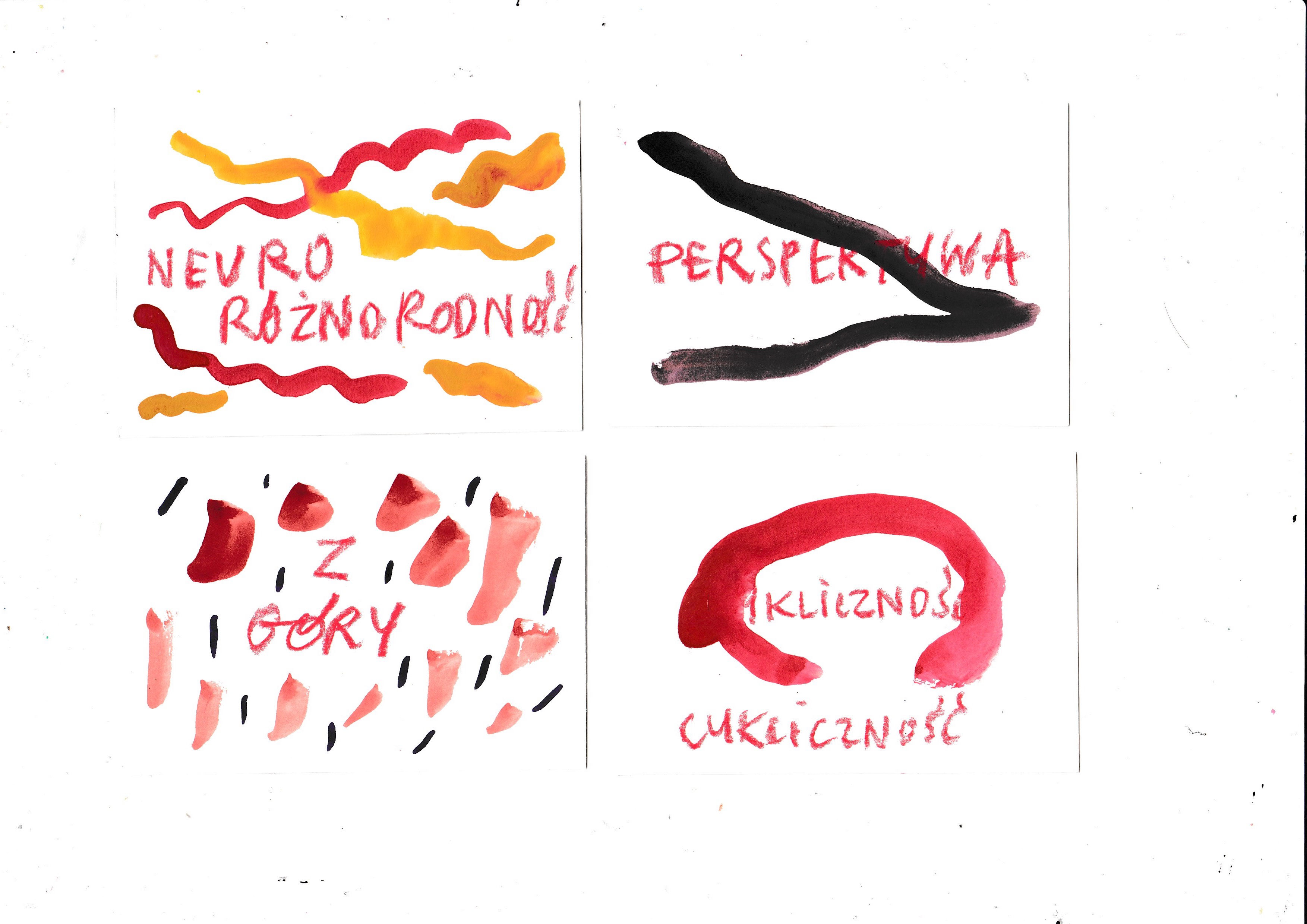
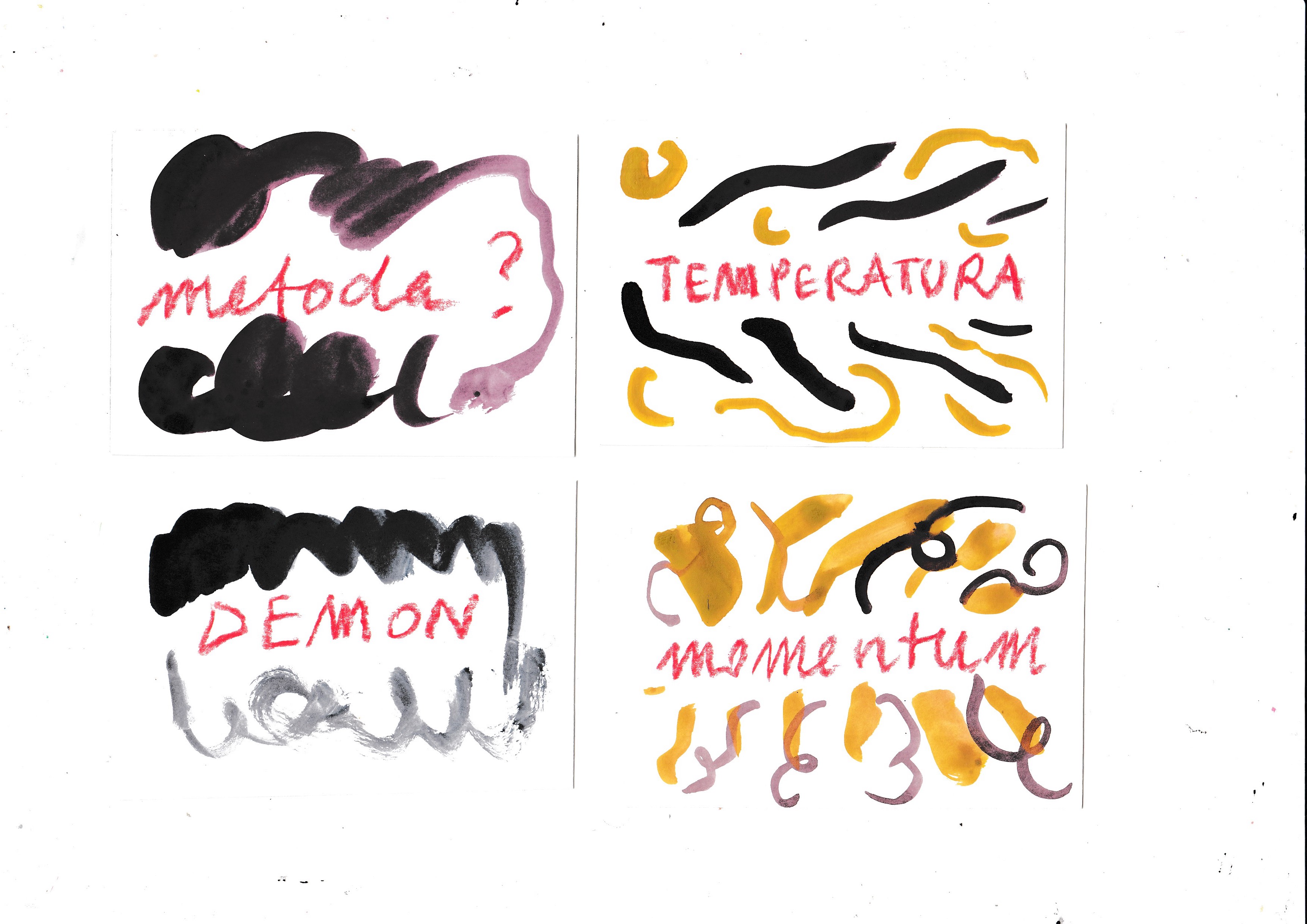
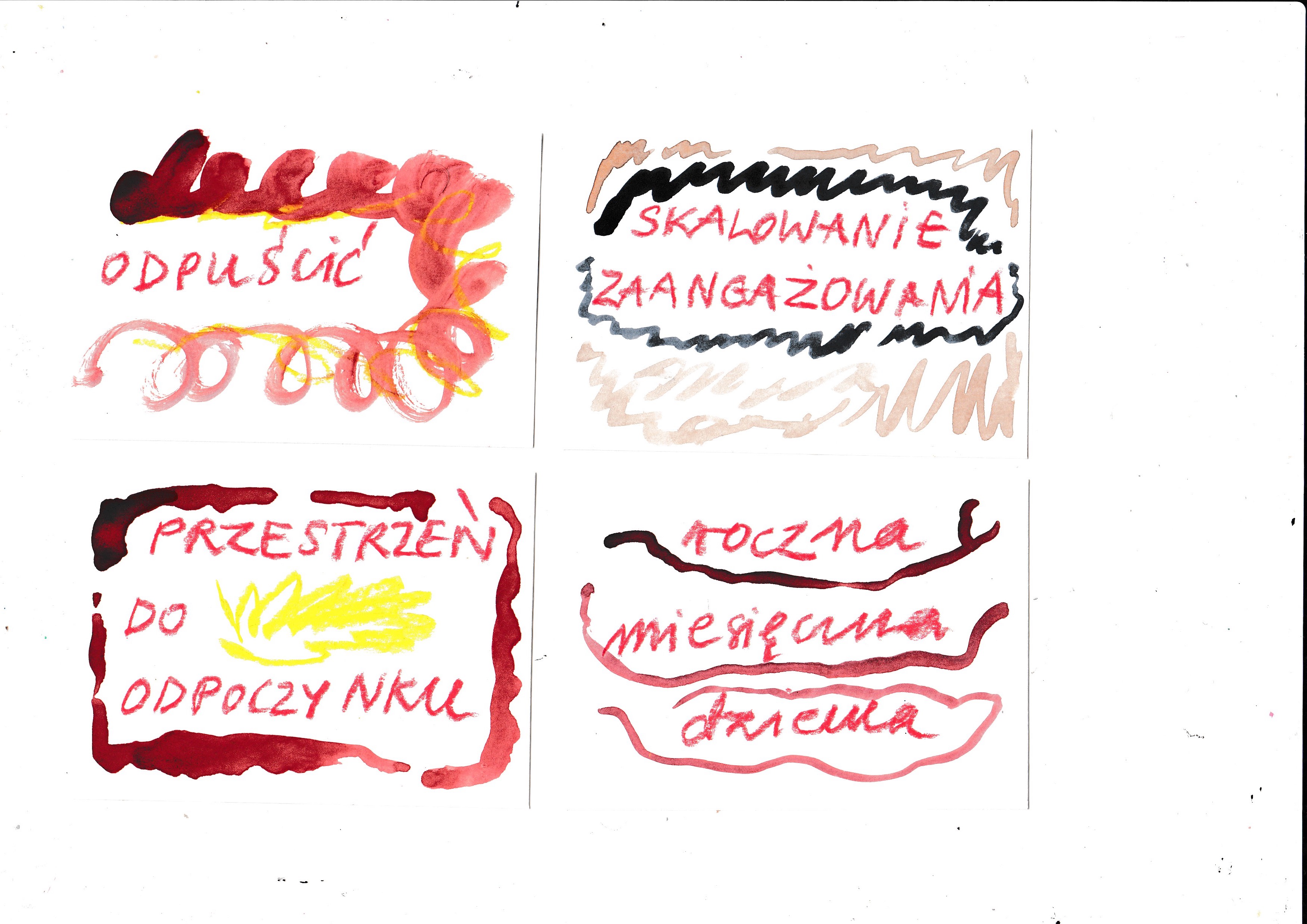
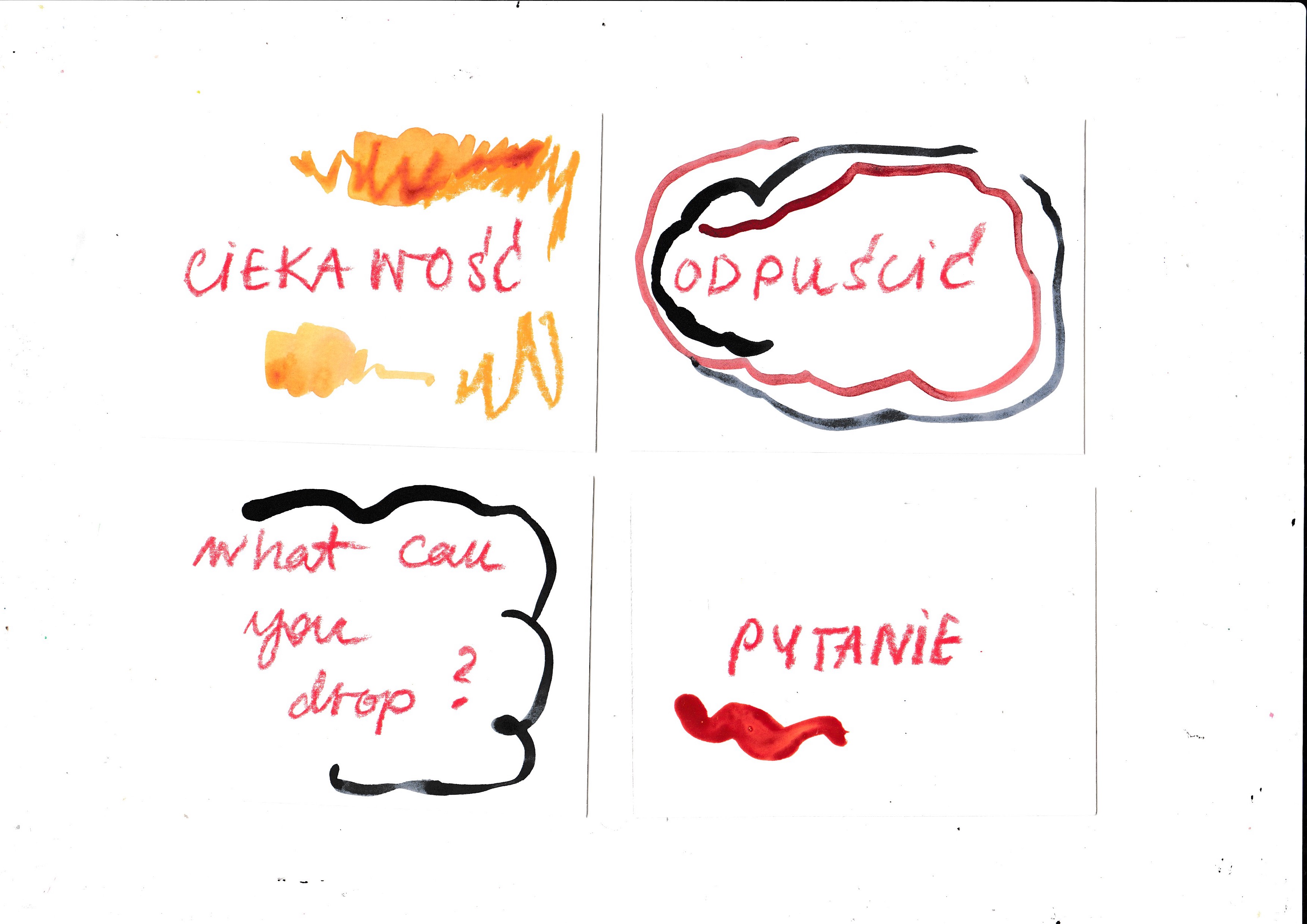
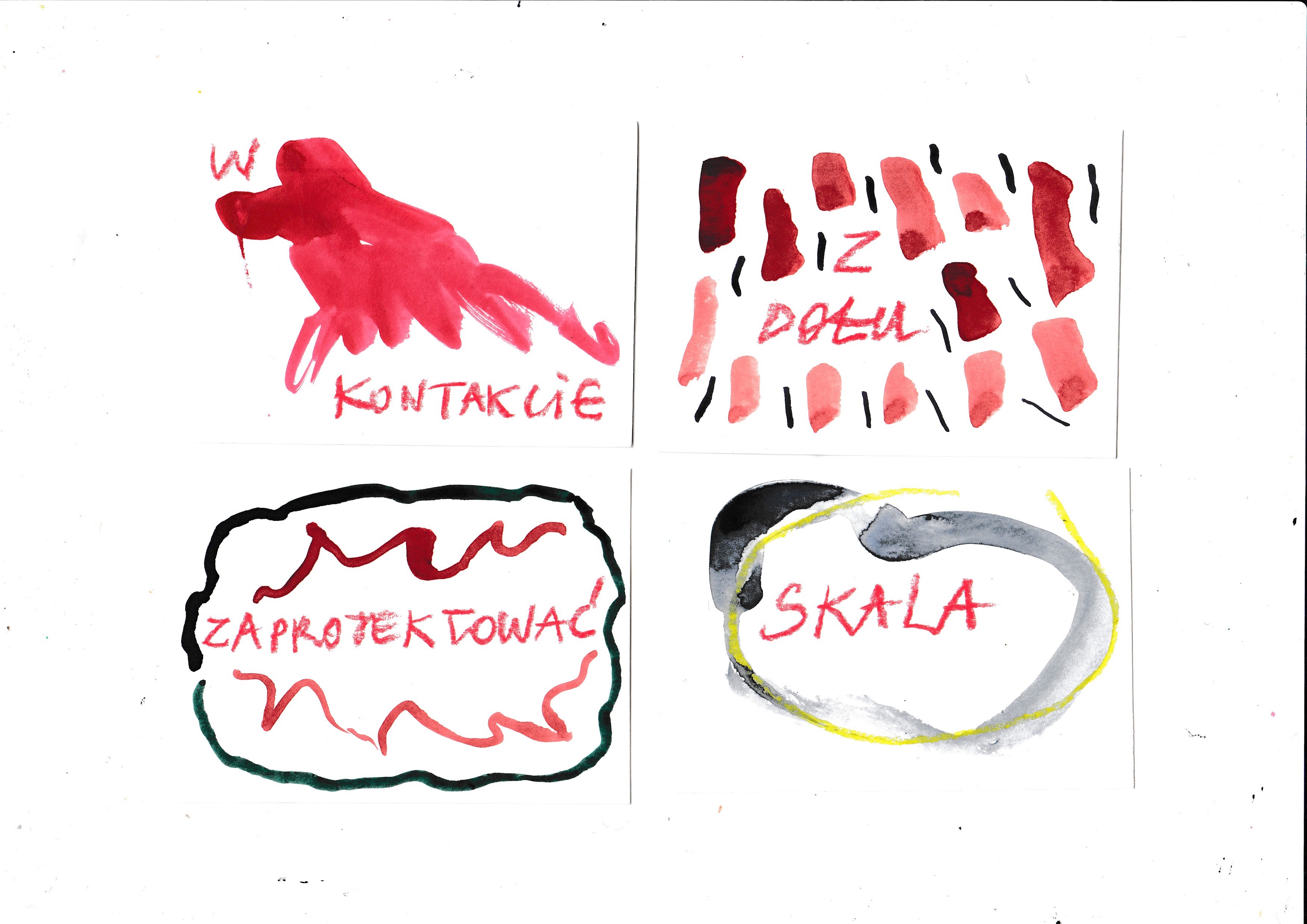
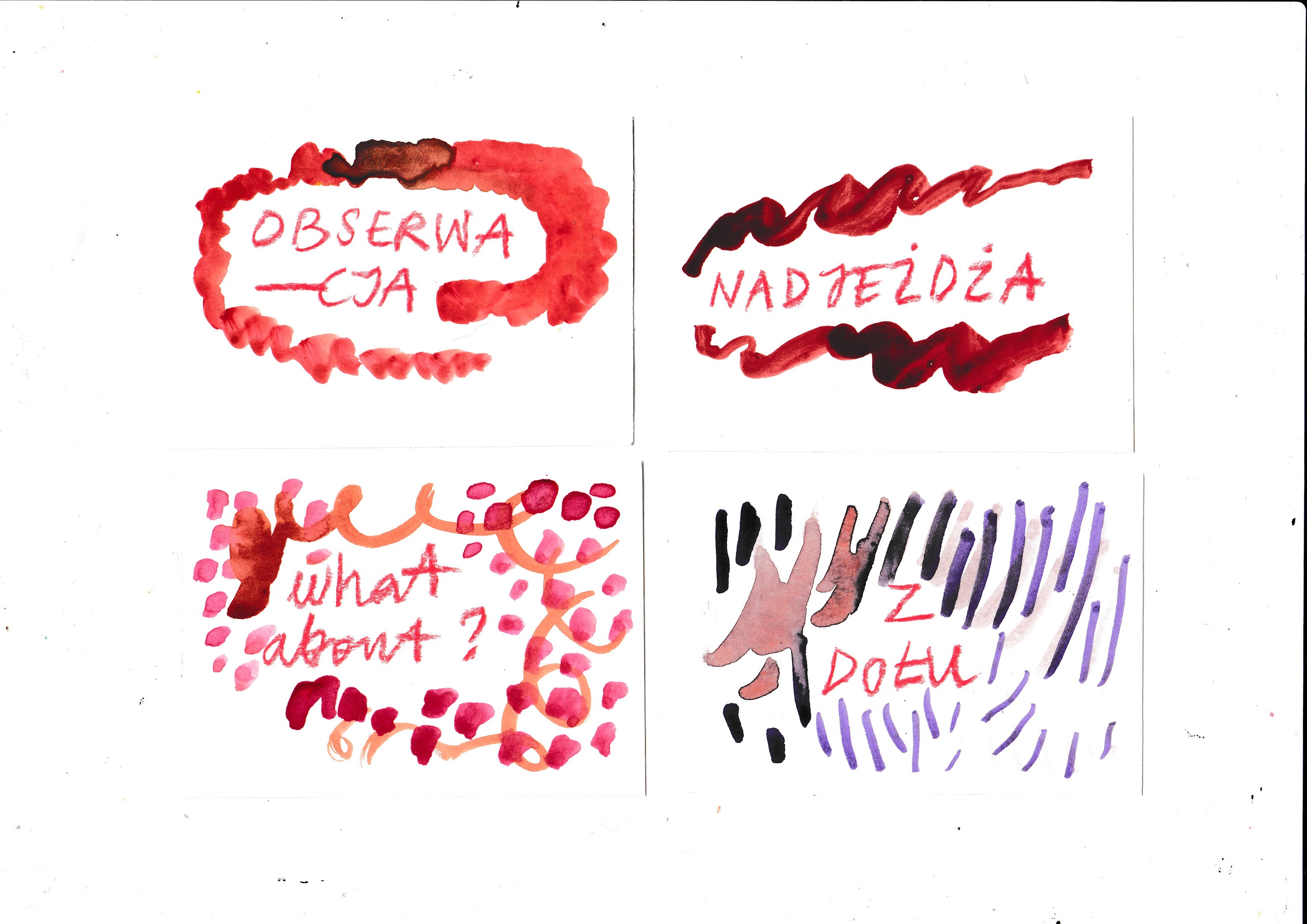
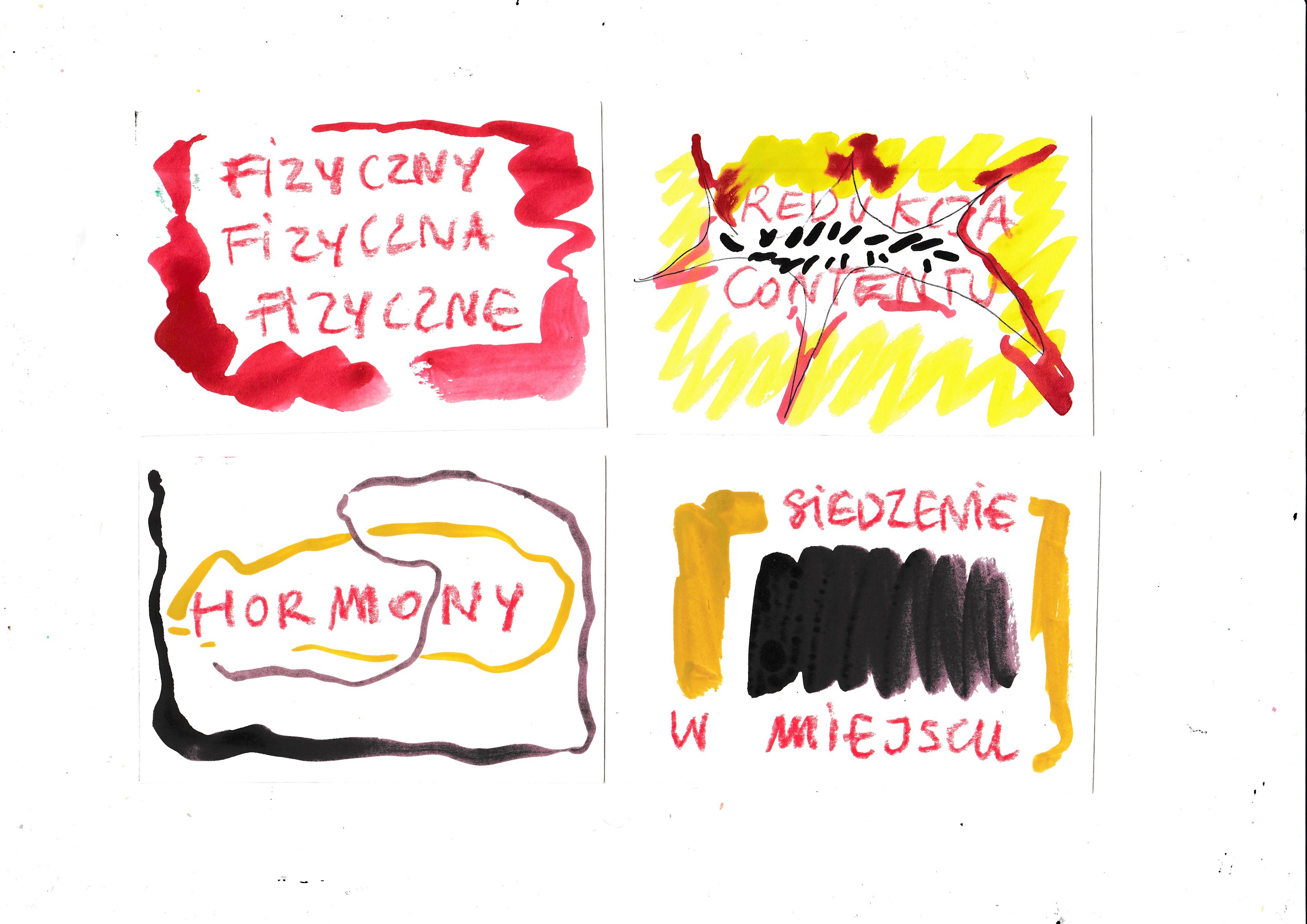
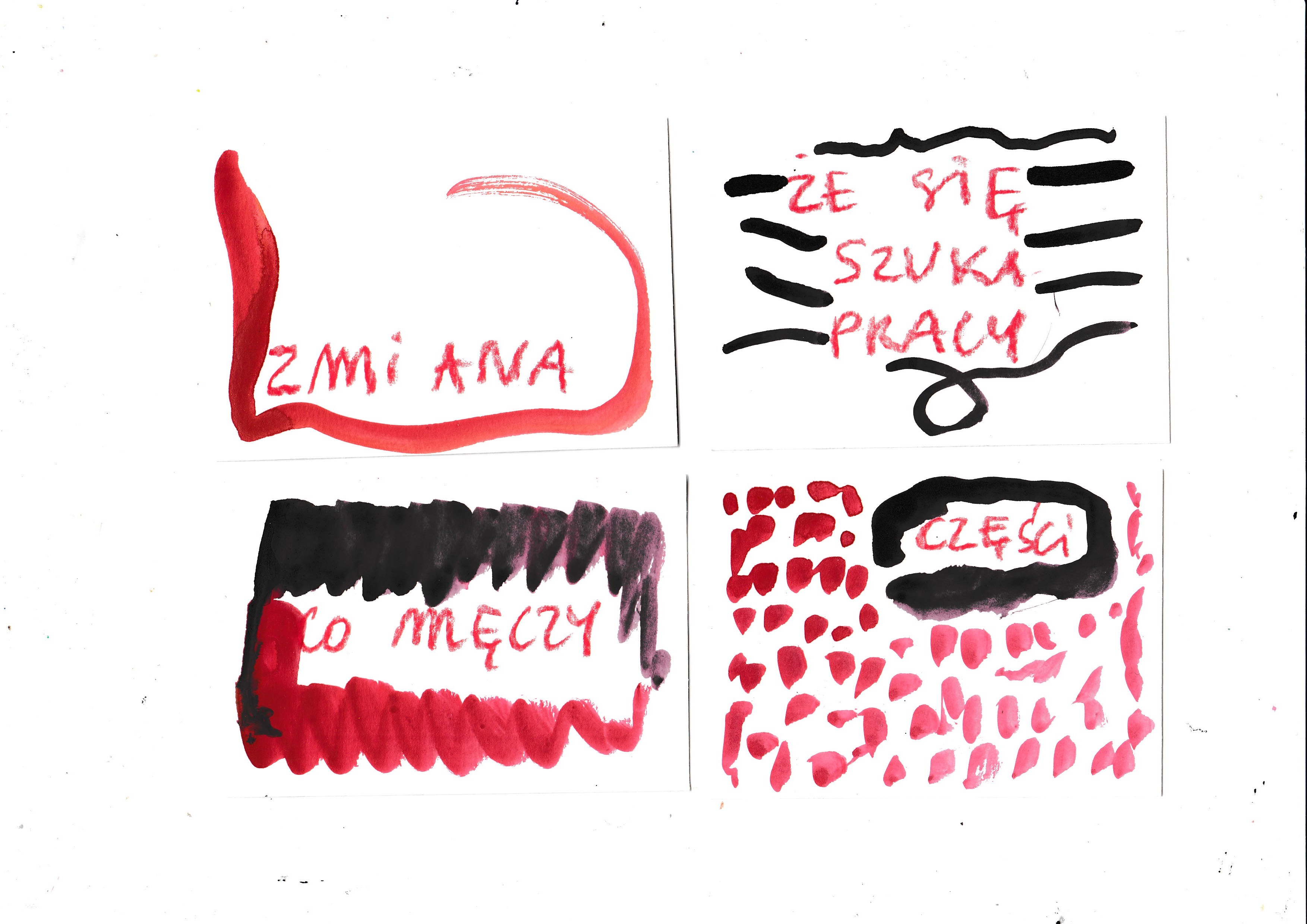
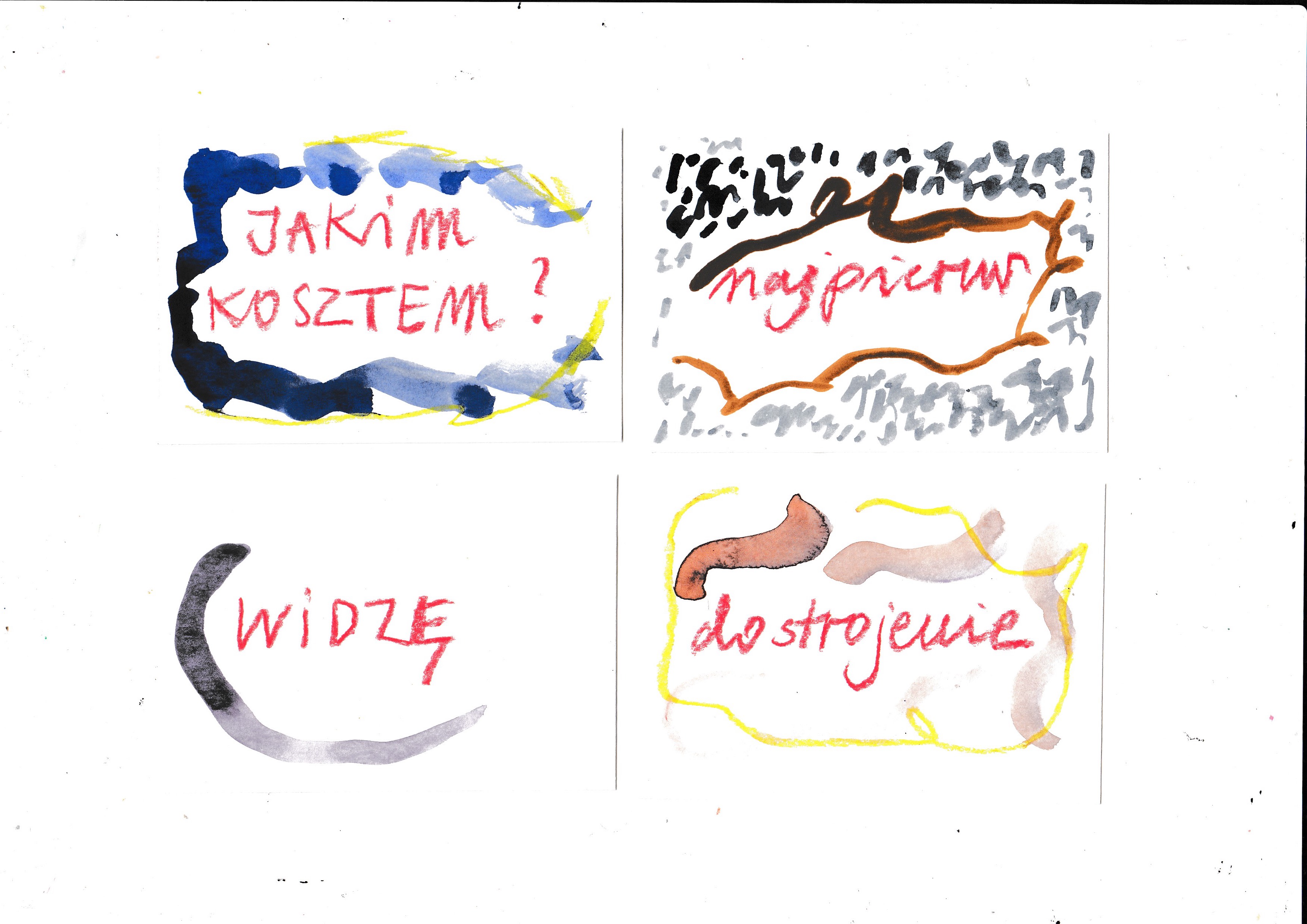
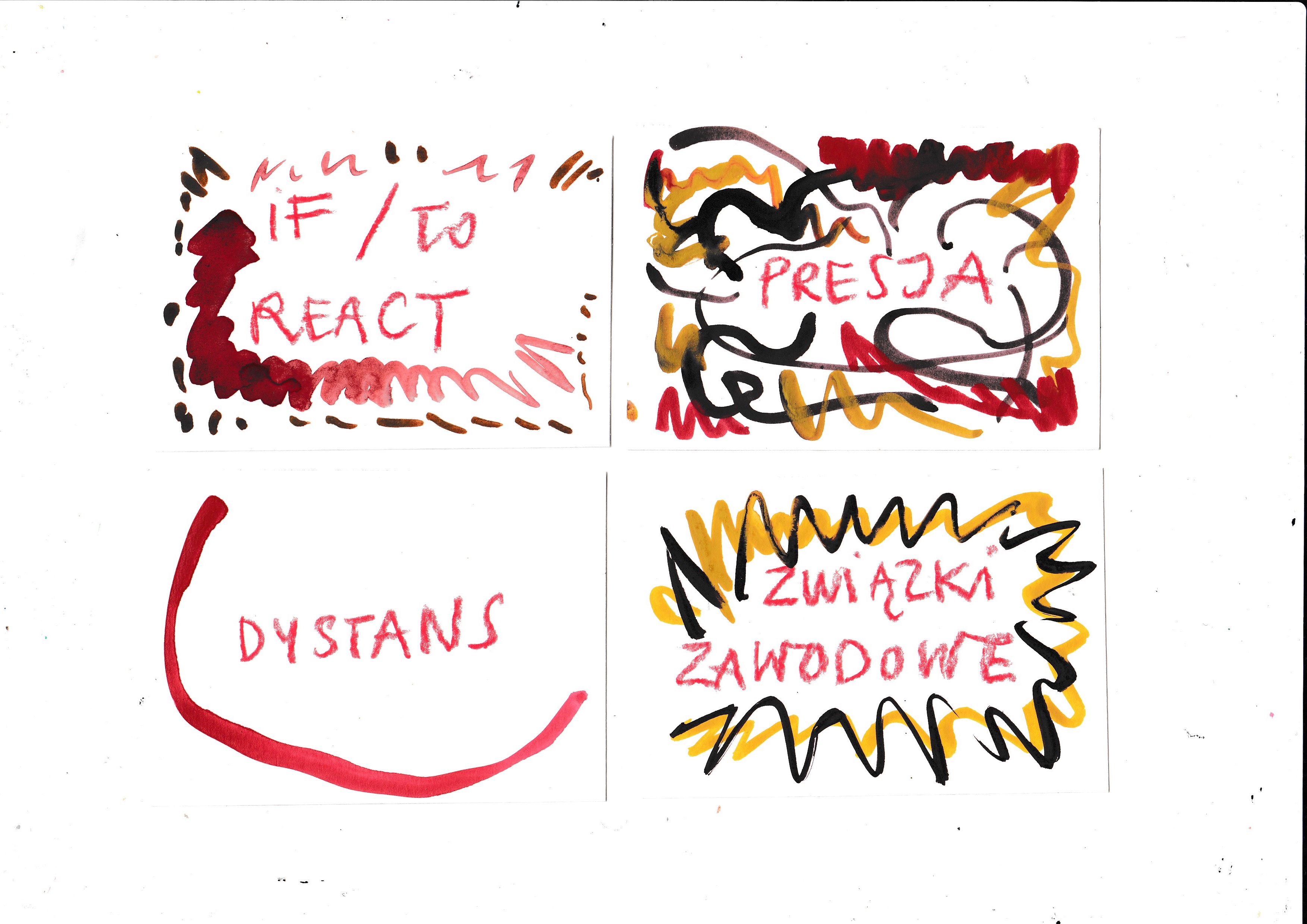
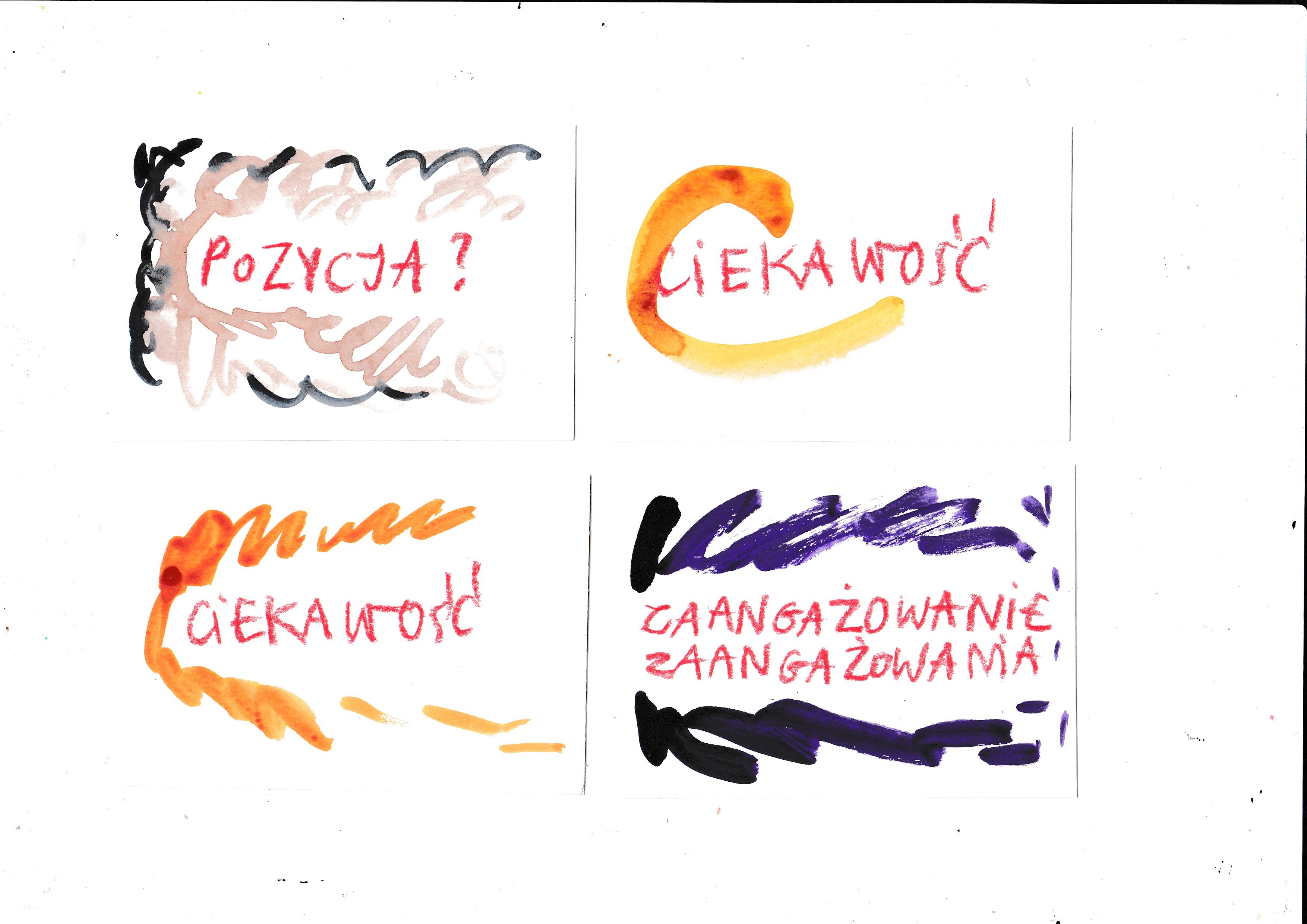
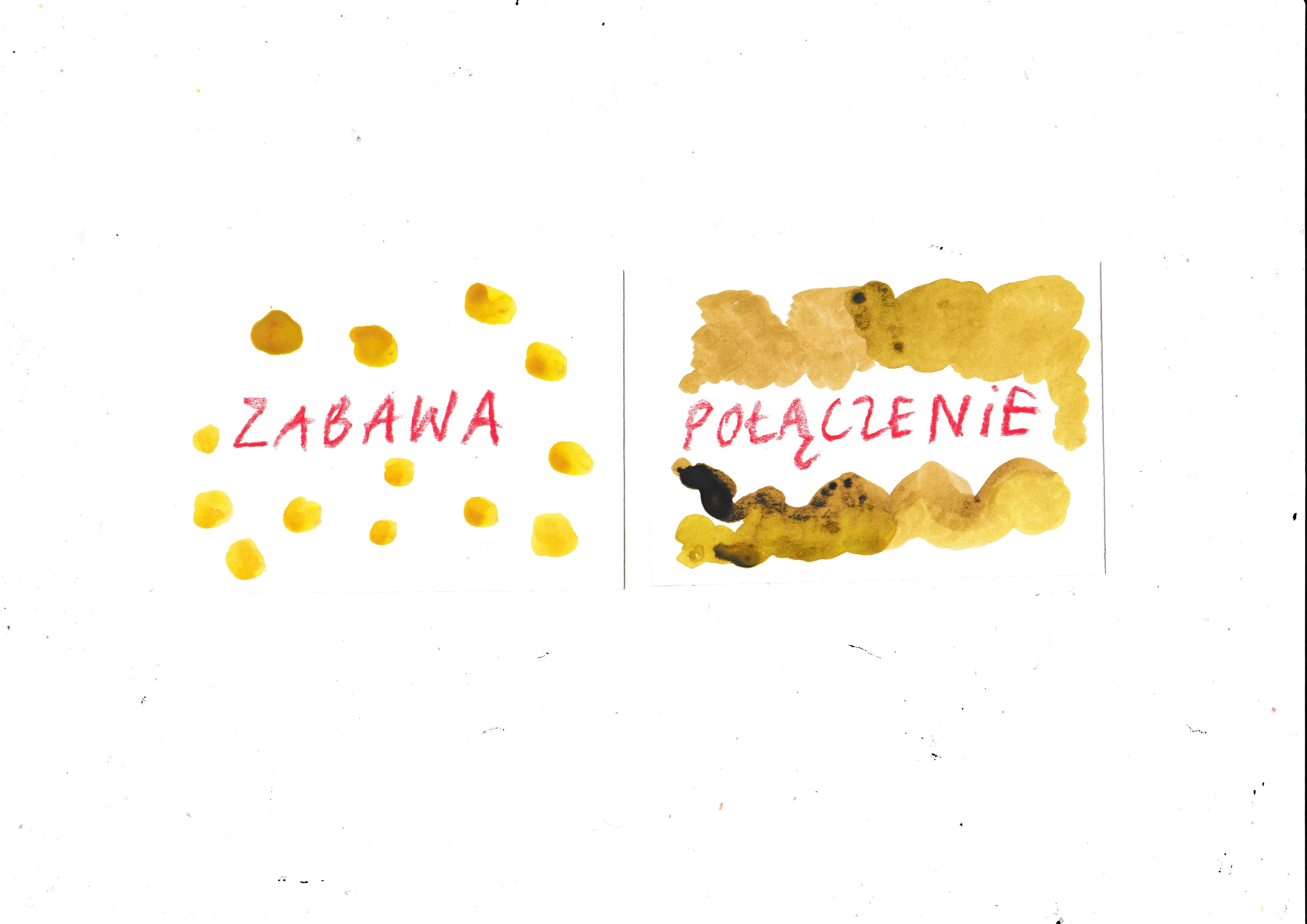
My process journal took the form of drawings. On my mind map, drawing stood out as an activity that gave me pure pleasure – drawing as sustenance. It was a way of hibernating (between projects, transfers, and bursts of energy). The drawings were a textual and visual transformation of the words that stayed with me after group meetings (see the attached file for a selection).
The residency gave me the opportunity to consider the usually invisible or unnamed forces that influence the pace, style and number of stops in my work. I am finishing it without clear solutions, but with a collection of reflections and greater self-knowledge and a sensitivity to the situation of other artists. Thanks to WOK’s financial support, I was also able to take better care of myself, for which I am grateful.