


Karolina Pluta
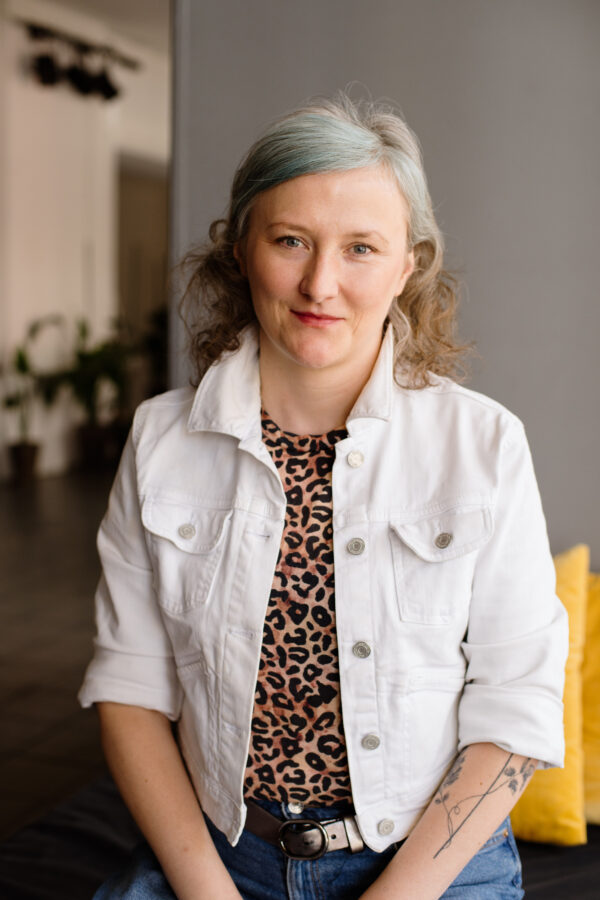
If ten-year-old Karolina’s dreams had come true, I would have become an athlete. However, I gave up running track in favour of running around the neighbourhood—not to win competitions, but to be part of a peer group. Sport gave me a flexible body, the ability to focus on goals, a sense of duty, and an acceptance of effort, disappointment, routine, and injuries. I have been working in culture for over twenty years. As well as pursuing my own artistic projects, I support the development of cultural professionals by providing tutoring, coaching, team supervision and anti-burnout workshops. I am there for others. I listen, empathise, ask questions and share in the losses and successes of the people I work with. I also explore working conditions in the cultural sector creatively, staging performances and conducting workshops.
I applied for the residency to take a closer look at my body, which is my greatest resource for creative and social work. My aim is to strengthen it so that I can consciously choose the cultural disciplines in which I wish to participate and to whom I wish to devote my attention and energy. When thinking about resilience, physical and mental health are the most important things to me. This became clear to me in autumn 2024 when a common cold turned into a debilitating illness that confined me to my home for weeks.
During the residency programme, I plan to reflect on my professional and creative future and consider how I can take on new challenges at the intersection of art and education. As part of the programme, I plan to work with a personal trainer to assess my physical capabilities. I intend to document this process through photographs and notes, creating a record of the emotional and physical sensations associated with exertion and rebuilding strength. This will serve as a memento for me, reminding me of what is truly important.
I believe that meeting and exchanging ideas with other artists and researchers will enable me to view my work from a fresh perspective, and to share the care, attention and inspiration that I am able to give to others.
I am a theatre educator, coach, social artist and performer. I create projects that combine education, art, and social activities to build spaces for dialogue and community. I run theatre workshops for young people and adults, facilitate participatory processes, and create performances. In 2025, as part of a scholarship from the City of Warsaw, I will be working on a stand-up show called Count to 10—a personal story about the experiences of mothers raising ‘difficult’ children. I have also been involved in counteracting professional burnout in the cultural sector for several years, conducting tutoring, coaching and development programmes for cultural staff. I graduated from the Laboratory of New Theatre Practices at SWPS University and studied coaching in Poland and the Netherlands. Since 2017, I have co-taught the Working with the Audience course on the Theatre Pedagogy postgraduate programme. Over the years, I have collaborated with numerous cultural institutions and NGOs in Poland and Europe, including the POLIN Museum, TR Warszawa, Nowy Teatr, the Museum of Modern Art and Uniarts Helsinki.
I work at the Association of Theatre Educators and the Culture Shock Foundation on a daily basis, implementing artistic and social projects and support programmes for people working in the cultural sector.
Karolina’s residency is summarised in a journal in the form of a short zine. Each Warsaw Observatory of Culture (WOK) residency has a unique dimension, and the participants’ personal accounts of their experiences reflect this diversity.
This is my diary, or rather a supplement to my paper diary
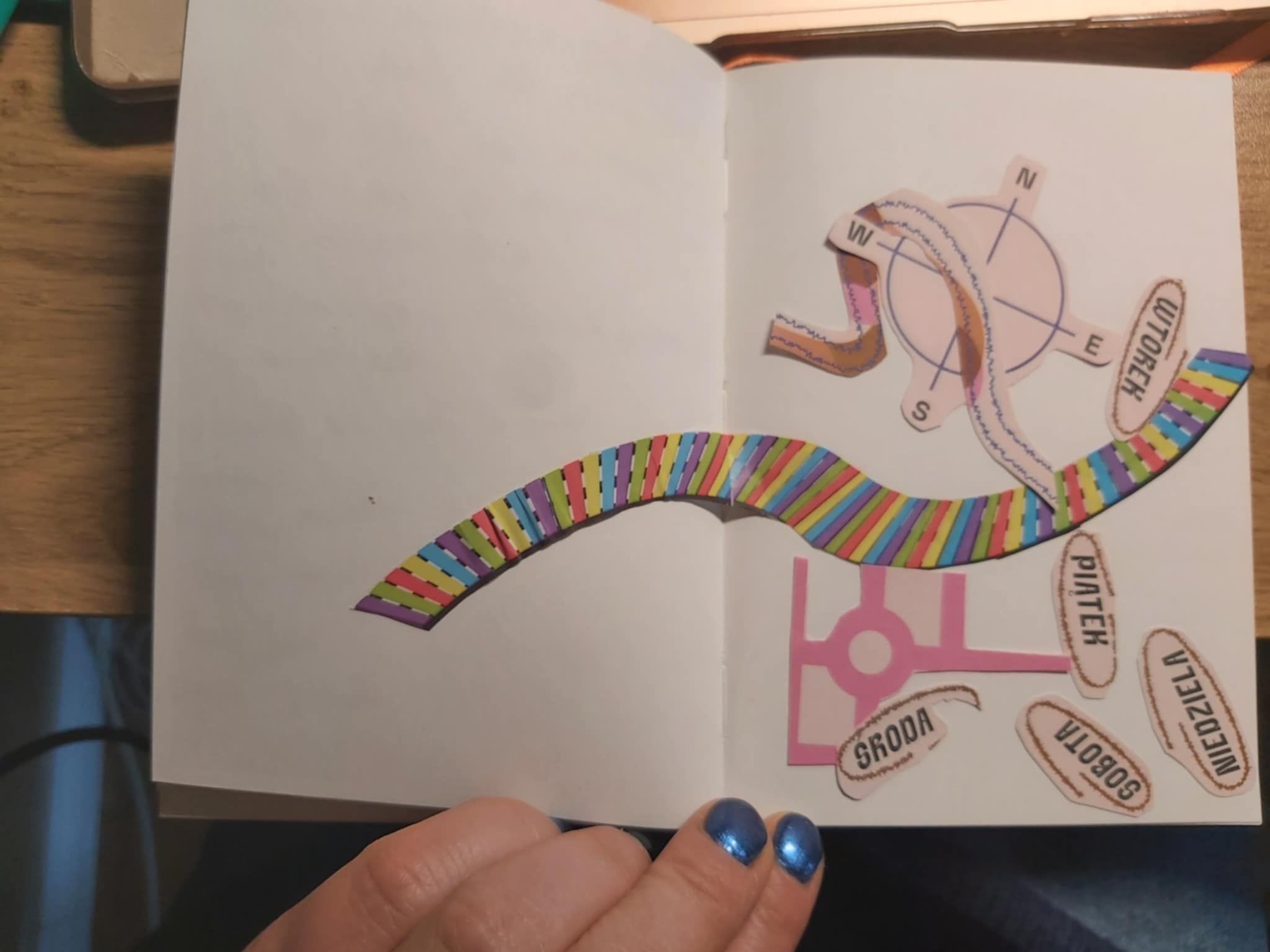
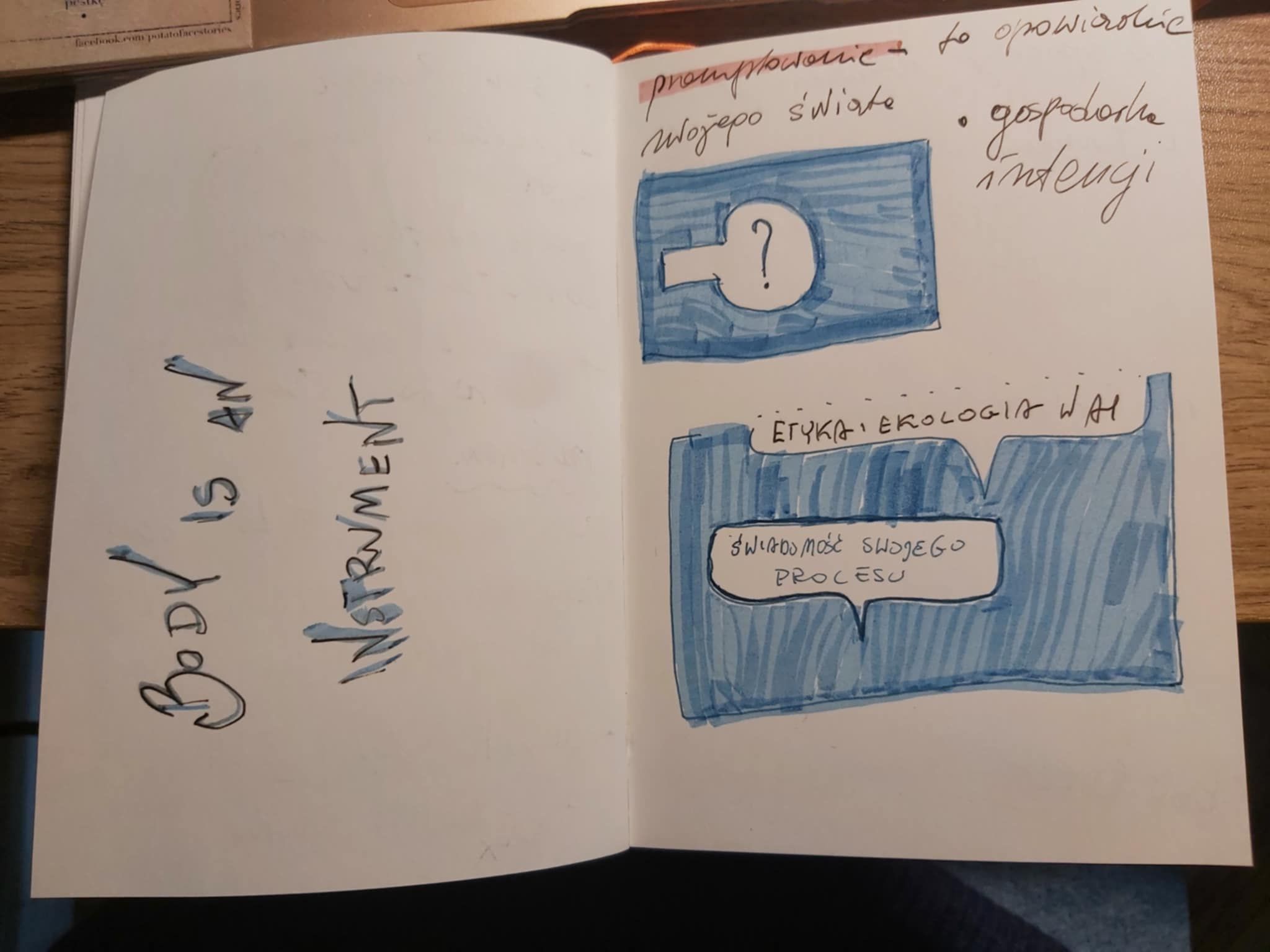
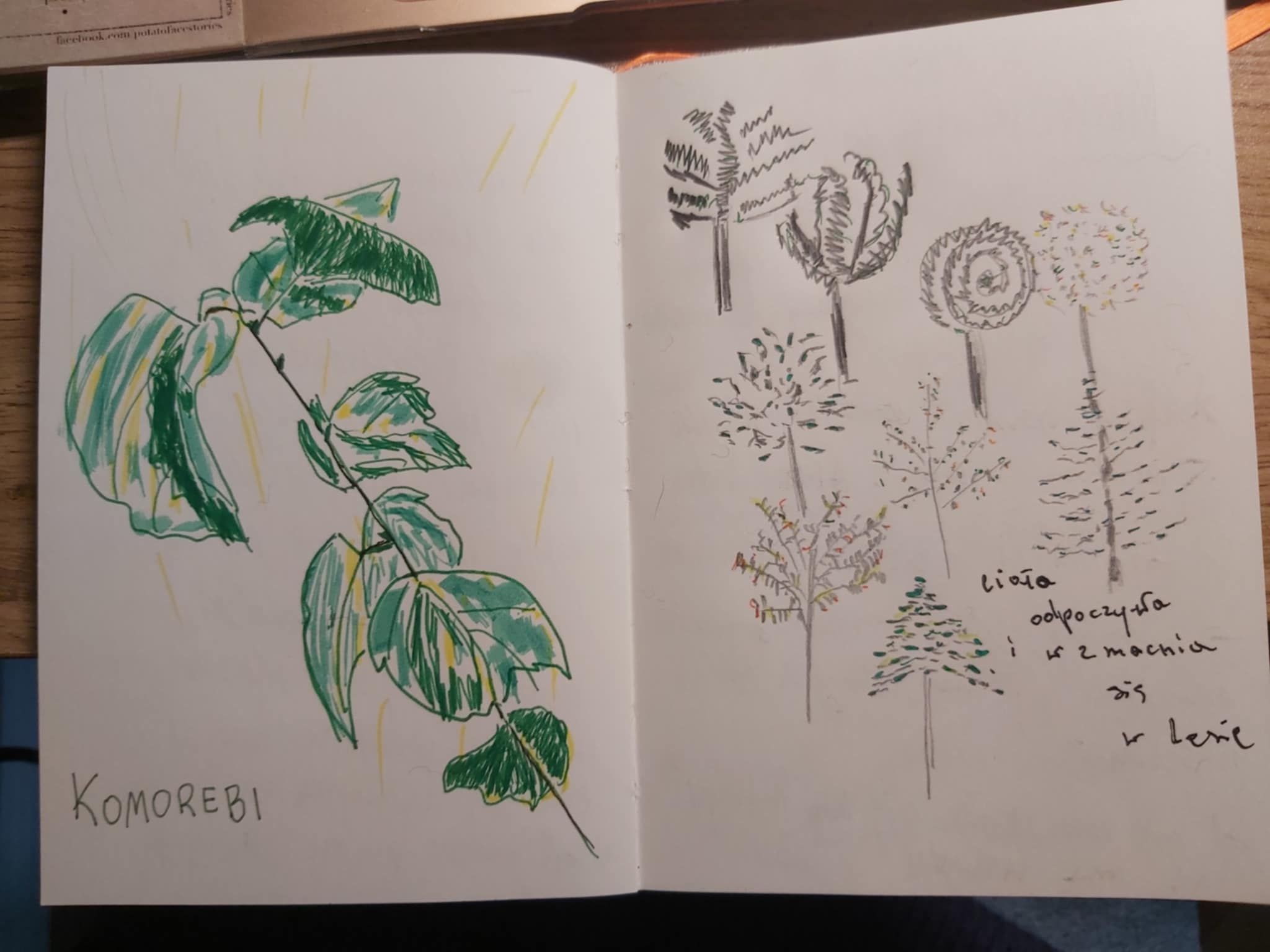
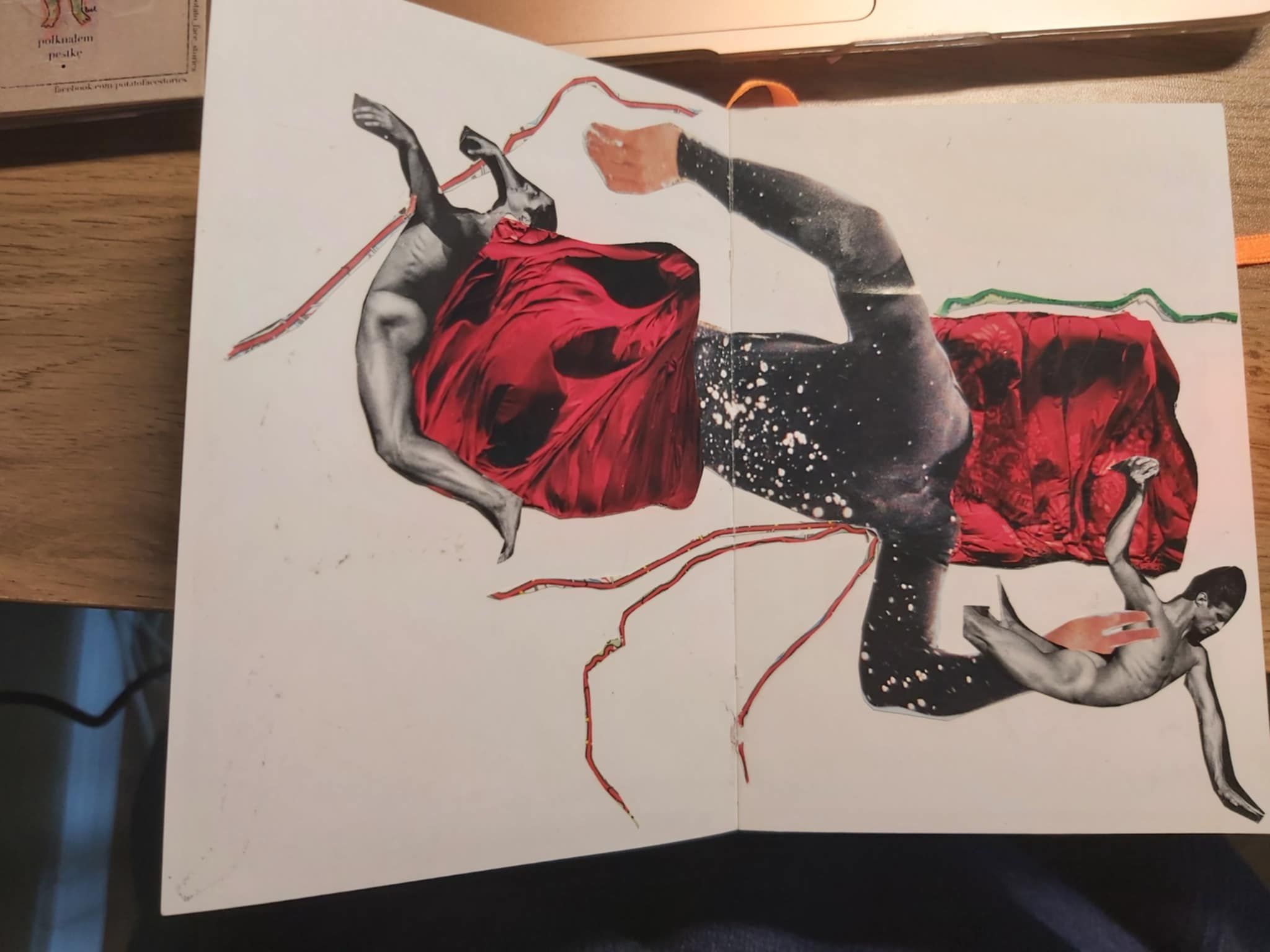
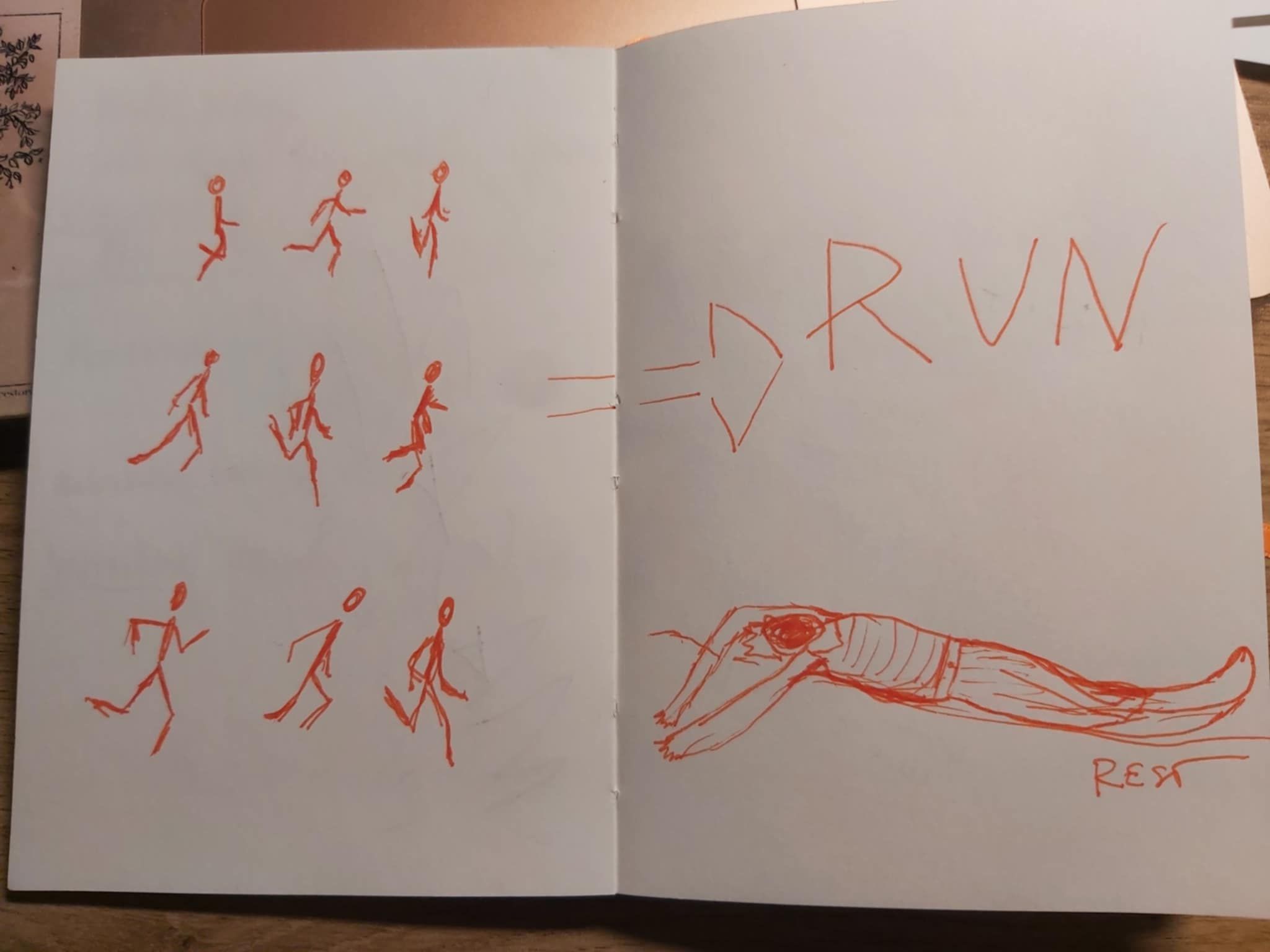
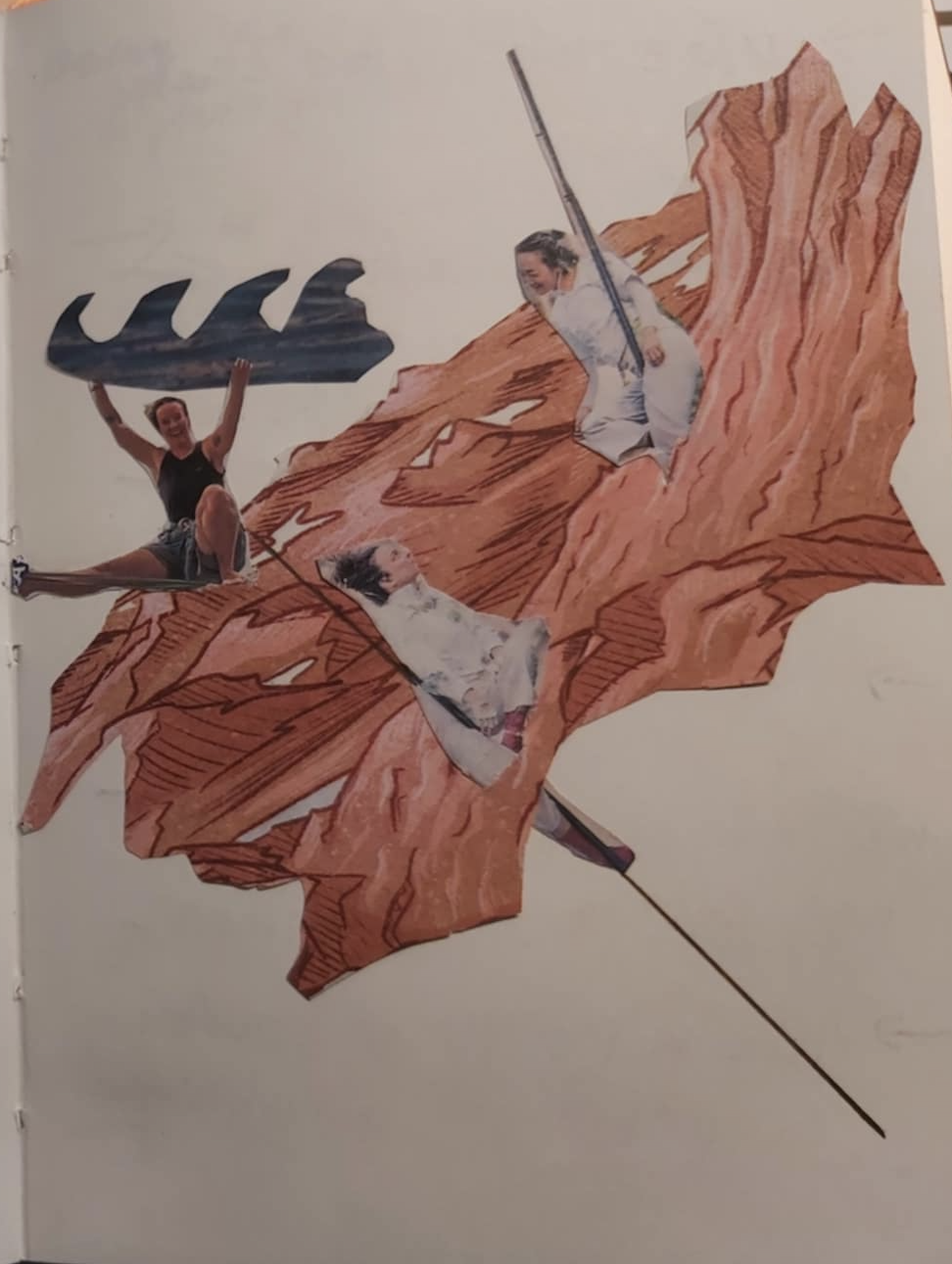
During my residency, my primary area of focus shifted to the body, viewing it not as an abstract concept, but as a physical organism. My goal was to increase my strength and resilience, so I participated in training sessions, received massages and visited the sauna. I also went for runs in the forest. Throughout my residency, I kept a diary. Notes, movement sketches and collages enabled me to document things that are usually overlooked in the daily rush, such as energy fluctuations, discomfort, pleasure, overload and moments of clarity. It was a record of my practice, not just theory.
Running returned to my life as a method, not a sport. Short walks with the dog and the first twenty minutes of the day,during which I did not have to prove anything to anyone, became my new rhythm.
I tried to find out to what extent effort could be a time of rest for me. Could motivating myself to go to the gym or for a swim be a way of letting go? Having a routine helps minimise the reluctance to leave the house on a cloudy day. It is known that effort leads to better well-being and clarity of thought. That’s why you get up, get dressed and go out: because you need it to function, create and make small and big decisions every day. That’s what I told myself. Finally, I could act in accordance with what my body was telling me, rather than pretending that my mind could handle everything on its own.
The residency gave me the opportunity to practise what I have long known, namely that my creativity and social work are rooted in physicality. When I take care of my body, I access resources that cannot be produced intellectually. When I overload it, my creativity shuts down. This time allowed me to reconnect with basic sensations, such as tension, relief, breath, pain, endurance and calm. All of these things contribute to greater self-awareness and improved health. I haven’t been ill this autumn! I have strength and energy. There was no pain associated with colds or fatigue. My body and I now have a healthy relationship.
During the residency, I also participated in a workshop on AI and creativity. Interestingly, this confirmed exactly what my body was teaching me: that technology and I do not share the same reference points. AI does not have feelings, get tired or regenerate, or store knowledge in its muscles. Meanwhile, my creativity resides in my body – in my breath, pain, relaxation and focus. As long as I care for my body well, creativity is available to me. The workshop reinforced this awareness: technology can be incorporated into work, but it cannot replace the living, somatic source of creativity.
The second part of my residency involved receiving individual coaching under Jagoda’s supervision. This helped me organise my career path and set a plan for the following year. I managed to set priorities and consider how to combine earning a living as a coach with my passion for social art. Although I am a coach myself, I had previously only sought this form of support once. Receiving coaching again after more than ten years, I feel, strengthens my credibility. What else did working with Jagoda give me? An increased ability to appreciate myself,and, consequently, the ability to properly value my work. I have decided to continue working in the cultural sector, which was unclear to me a few months ago. I also agreed on how to choose the organisations and institutions I want to work with. I decided to take a temporary break from starting another postgraduate course. I decided that I always want to combine somatic and intellectual perspectives.
I believe that I have embodied the motto of this edition of the WOK residency: resilience, resistance, and strength. These qualities are present in my life.