


Ewa Dąbkowska
I graduated from the Academy of Fine Arts in Warsaw with a degree in Painting in June 2024, and since then I have been trying to find my place in the artistic community. Although I had been active in a collective for four years, co-organising exhibitions and creating art, leaving the supportive environment of the academy was a huge shock to me. For several months, I struggled with depression as I tried to get my life together and focus on art. Creativity became more of a necessity than a pleasure, and both my mental health and my creativity suffered as a result.
I was close to abandoning the art world and returning to my hometown, but I decided to give myself time and a chance, as I care so much about art. Before studying at the Academy of Fine Arts, I studied astronomy. During my studies, I came to terms with my sexual orientation and decided to work with people who were afraid of themselves, just as I was before—that’s why I started creating art.
I am applying to the programme to help me identify my priorities, calm my breathing and create work with the help of mentoring and financial support. I am currently working on a series about mourning the ‘loss’ of heterosexuality, which is demanding in terms of both time and mental energy. I want to highlight hidden topics that, when addressed, can provide support and understanding. I want my art to provide my audience with a sense of relief through the experience of community.
In my opinion, the theme of this edition touches on the struggles of young artists to find their place in the art world and break through the glass ceiling. A sense of stability and security among artists is essential for the resilience of the art community.
Through my art, I address topics that are often overlooked in the queer community. People who struggle with these issues often feel alone and do not talk about them.
I realised how important it was to address these silenced issues when, during my graduation exhibition on the relationship between queer people and faith, many people approached me to say that they had felt alienated, and to thank me for providing them with a sense of community.
Having seen the real impact that such action can have on people, I am determined to continue addressing niche, untouched topics. Currently, I am preoccupied with the grief experienced by queer people in relation to the ‘loss’ of heterosexuality. This is one of the silent aspects of their experience and, for some, it is even a source of shame and guilt. During the programme, I would like to continue working on this topic, learn how to communicate with more people affected by this issue and explore different perspectives to share.
I ran queer knitting meetings in the summer of 2024 and planned to resume them in autumn. However, I couldn’t find a venue or funding and was struggling with depression, so I put this topic on hold. I therefore put this topic on hold. I would like to learn more about running meetings and facilitating conversations and community action. I want to learn how to create an open space that provides a sense of security and support. Knitting together helps people open up and form bonds, which is especially beneficial for shy and neurodiverse individuals.
Equally important to me is learning how to maintain balance and mental health amidst all this, so as not to burn out from the enormous amount of sadness and problems I deal with. I would need support with this, both practical and perhaps psychological.
I am a knitter, painter, co-founder of the Splendor Group, and member of Dolina Niesamowitości [Uncanny Valley]. In 2024, I graduated with honours from the Faculty of Painting at the Academy of Fine Arts in Warsaw.
Through my art, I explore the experiences of queer individuals, particularly their relationships with faith and their upbringing in heteronormative societies. By incorporating Christian and queer symbolism, I create an inclusive language of meanings and, with it, a space for conversation and empathy. I aim to raise awareness of issues that are not widely discussed in the community, so that those who are affected by them do not feel alone. I paint with egg tempera, reflecting on the sacredness of images and individuals. At the same time, I knit clothes and tapestries. Reproducing designs methodically in knitwear has a meditative effect on me. By creating images from dozens of thin threads, I explore the therapeutic effect of knitting on the psyche. I knit to help me regulate myself and to raise awareness of the therapeutic properties of knitting.
My work has been presented at numerous group exhibitions throughout Poland, as well as at individual and collective exhibitions. I was a finalist in the 11th Young Art Biennale ‘Rybie Oko’ (2024) and the 12th International Biennale of Artistic Linen Fabric–Debuts (2024), among others. In the same year, I participated in the intergenerational plein air event ‘Biały Szum’, organised by the Baltic Contemporary Art Gallery. My tapestries were selected for the 23rd SURVIVAL 3s/8h Art Review in 2025.
Summary of the residency
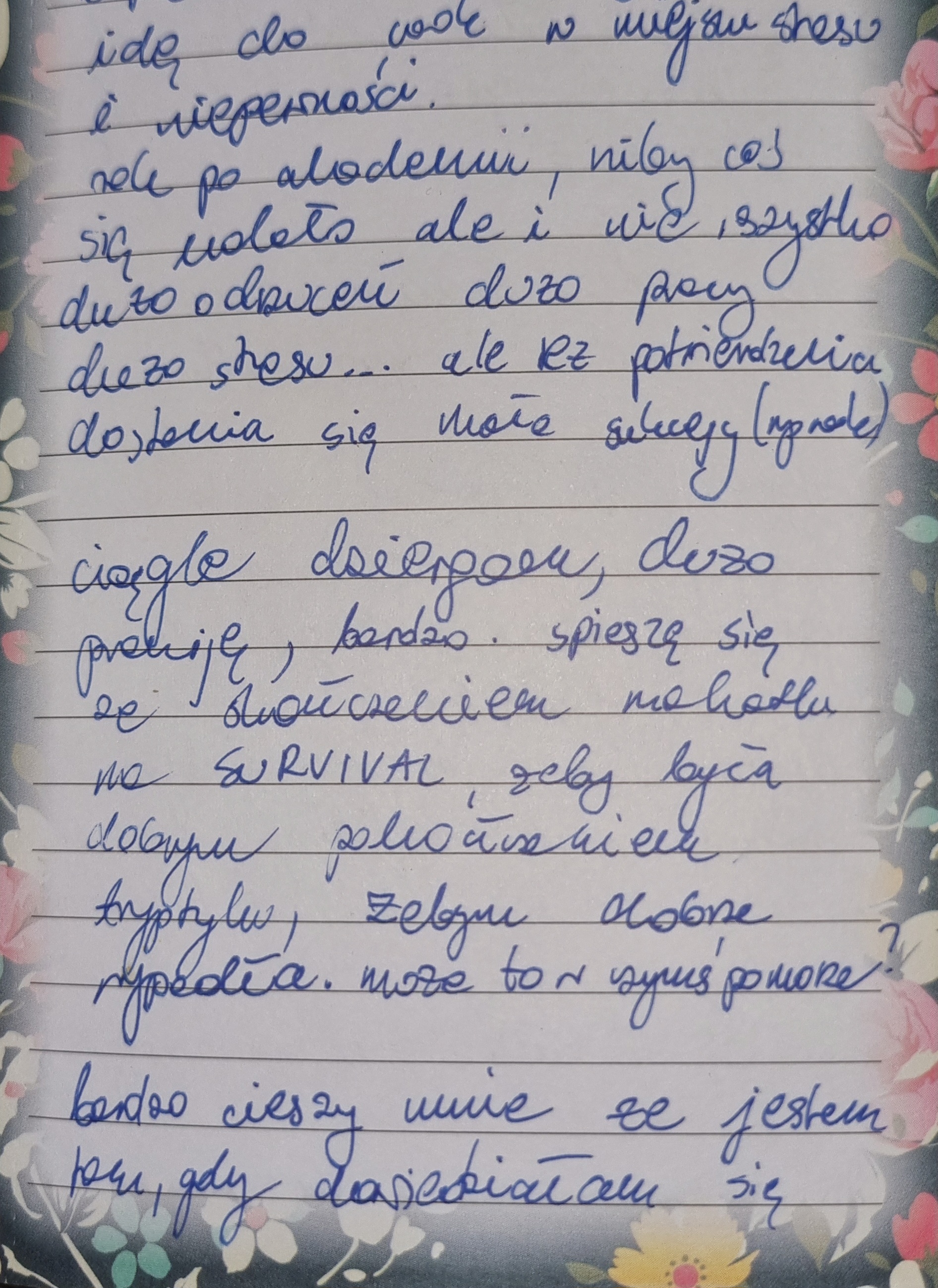
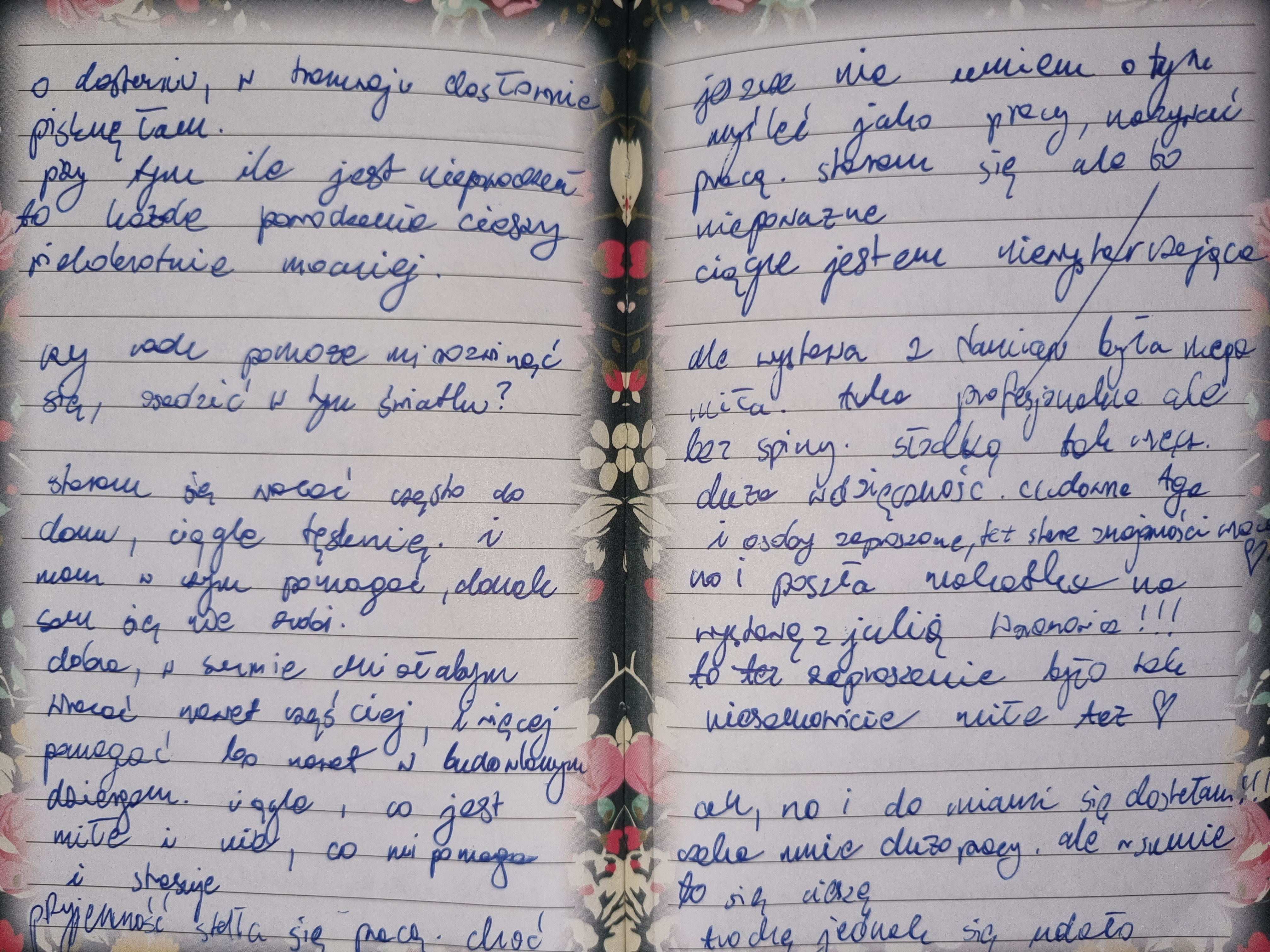
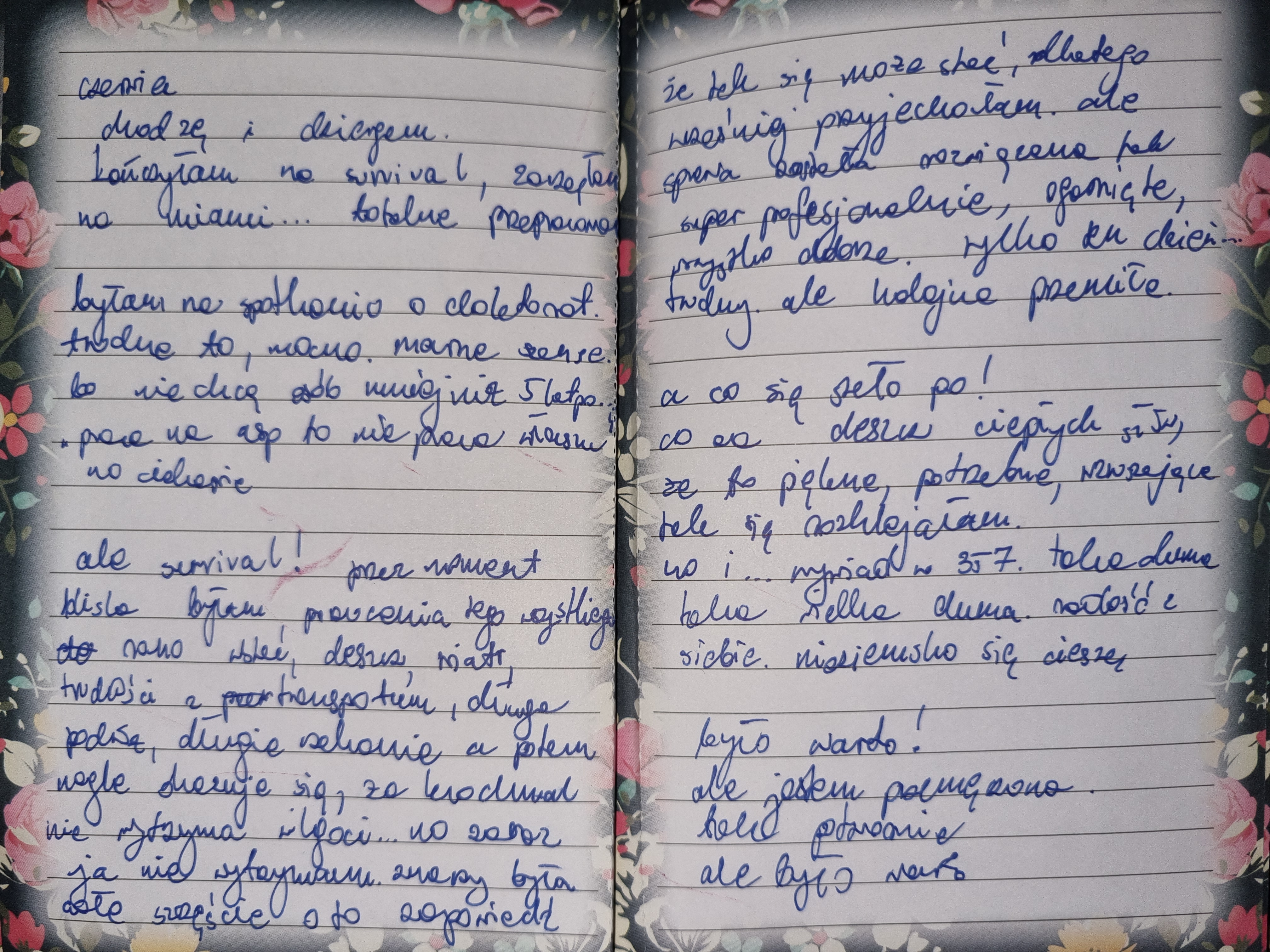
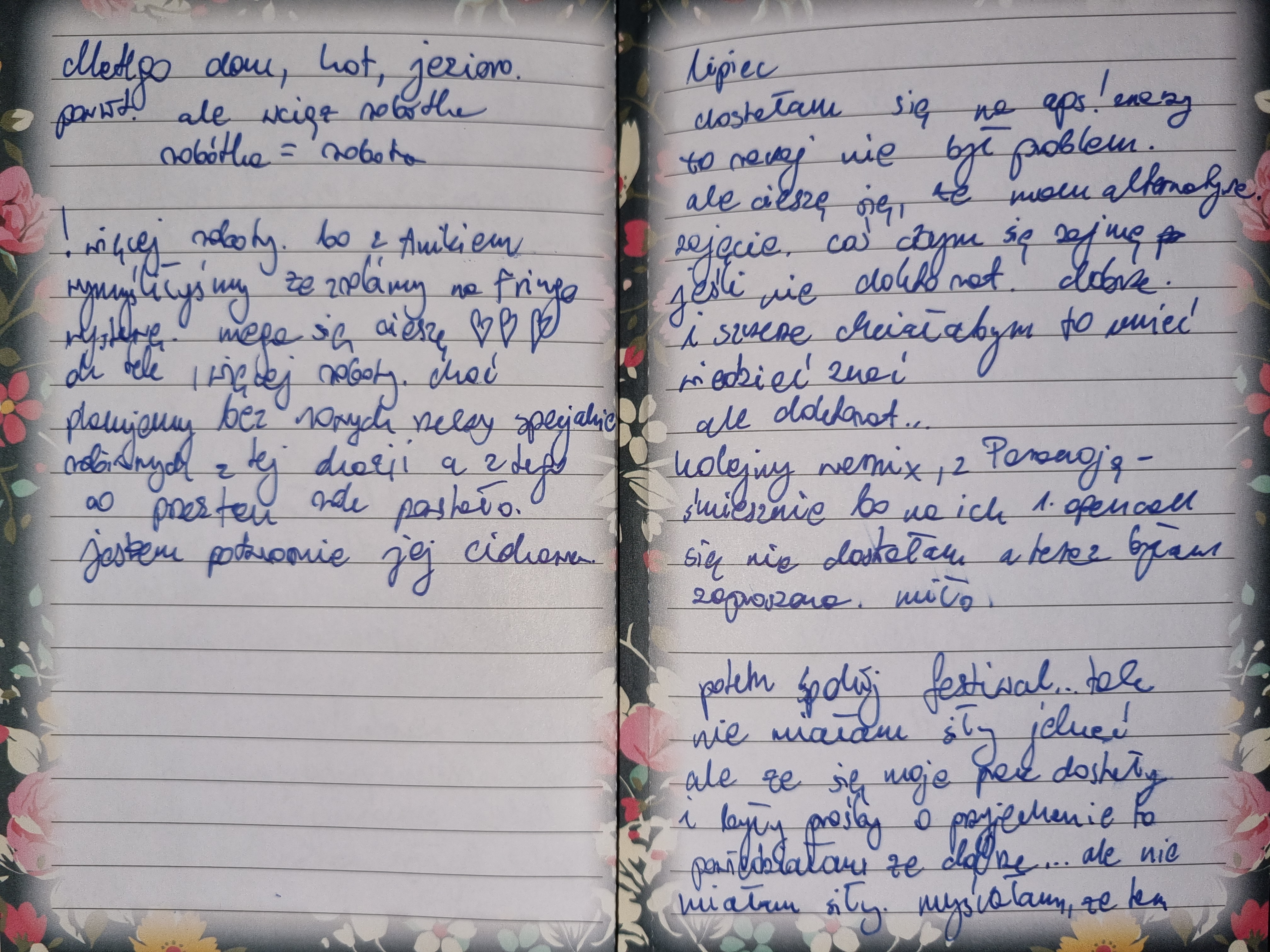
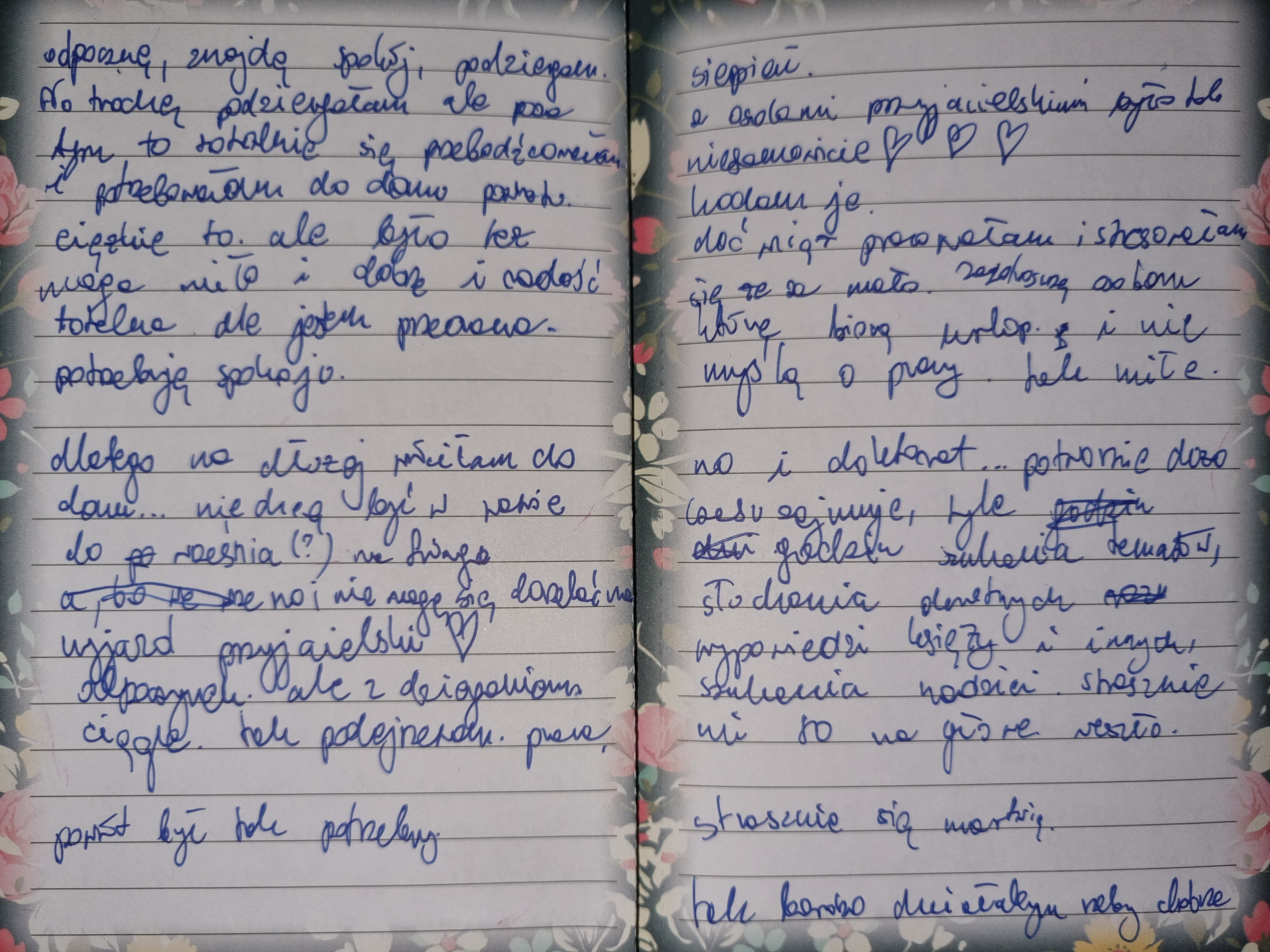
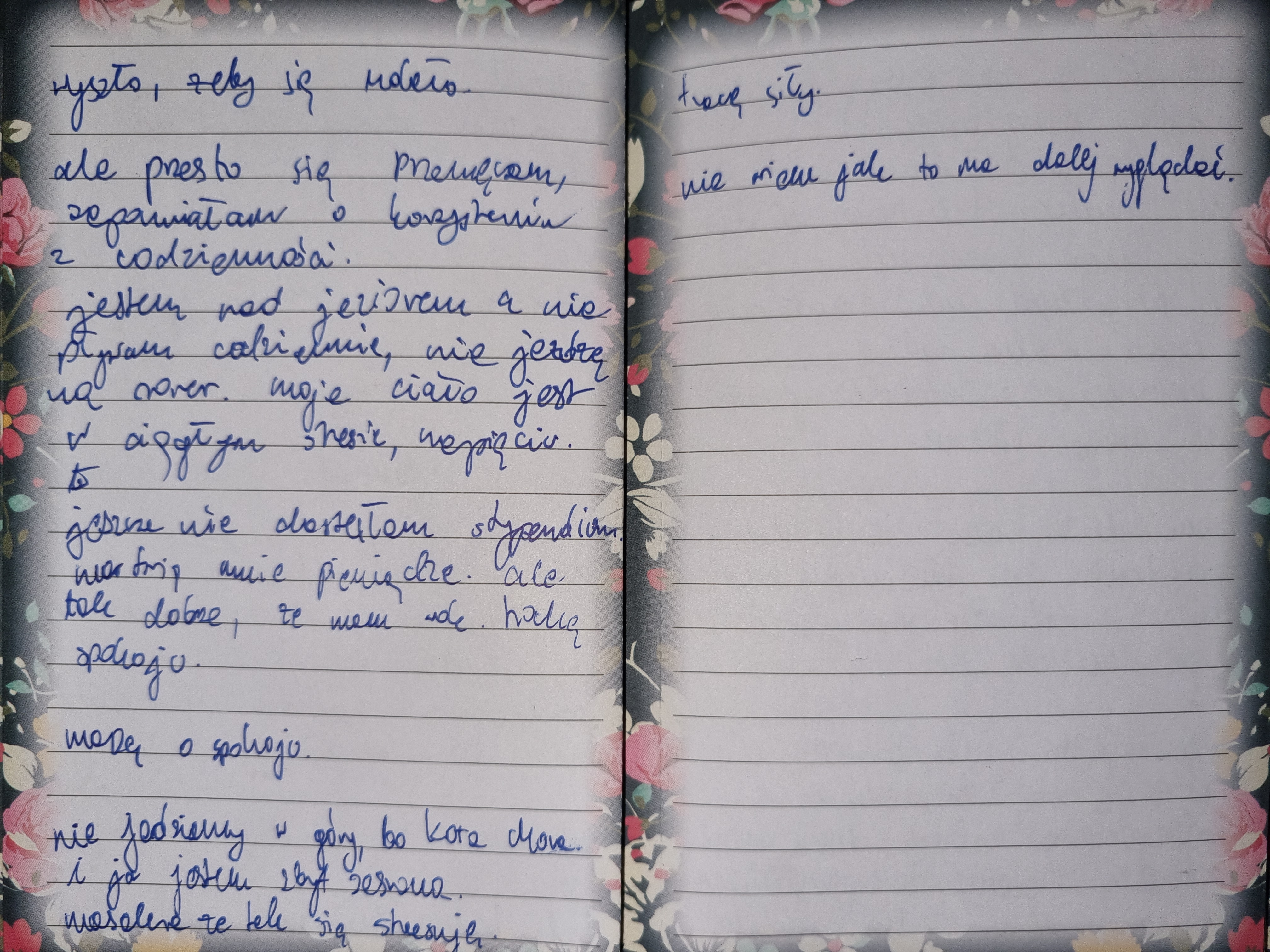
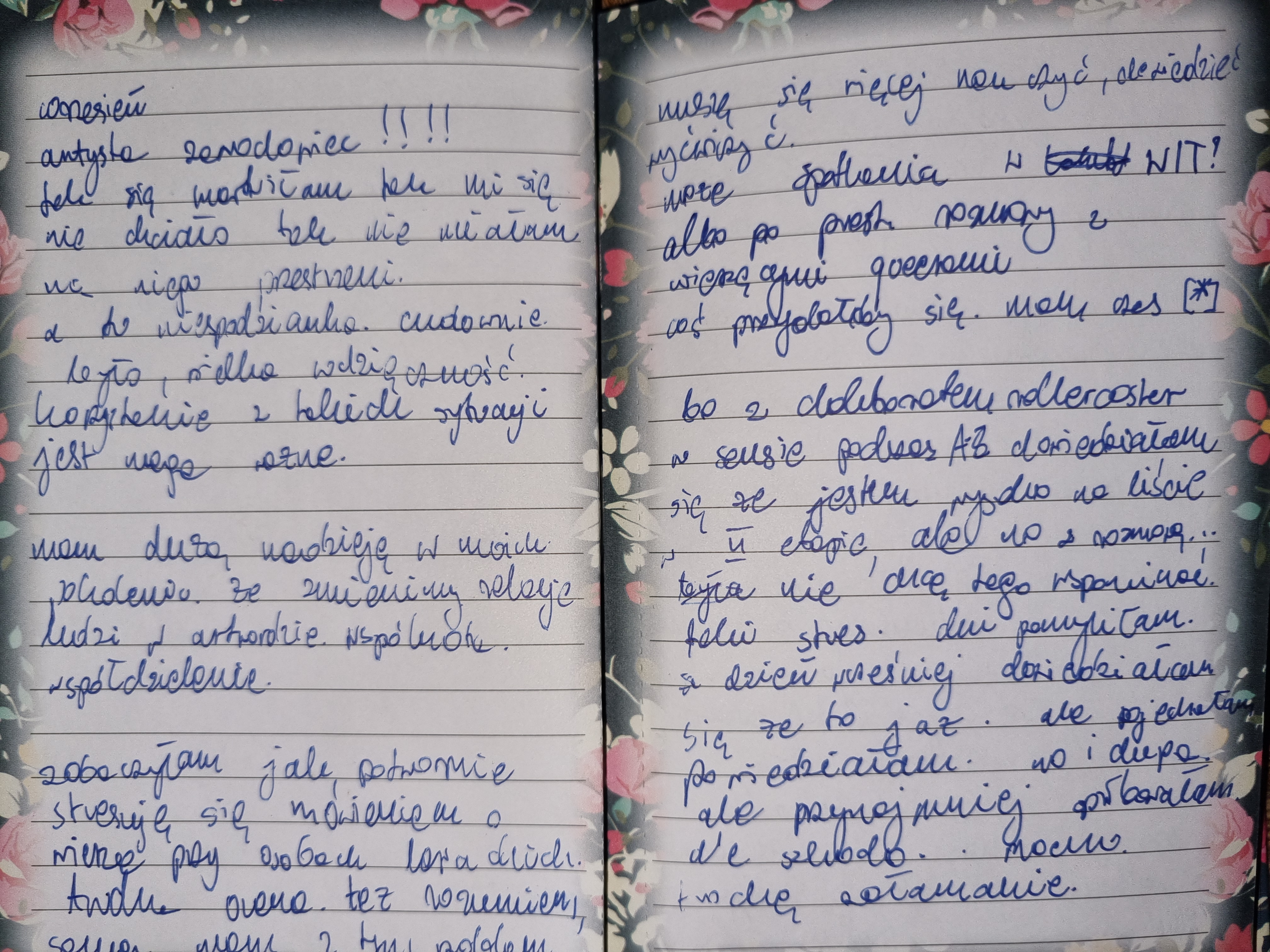
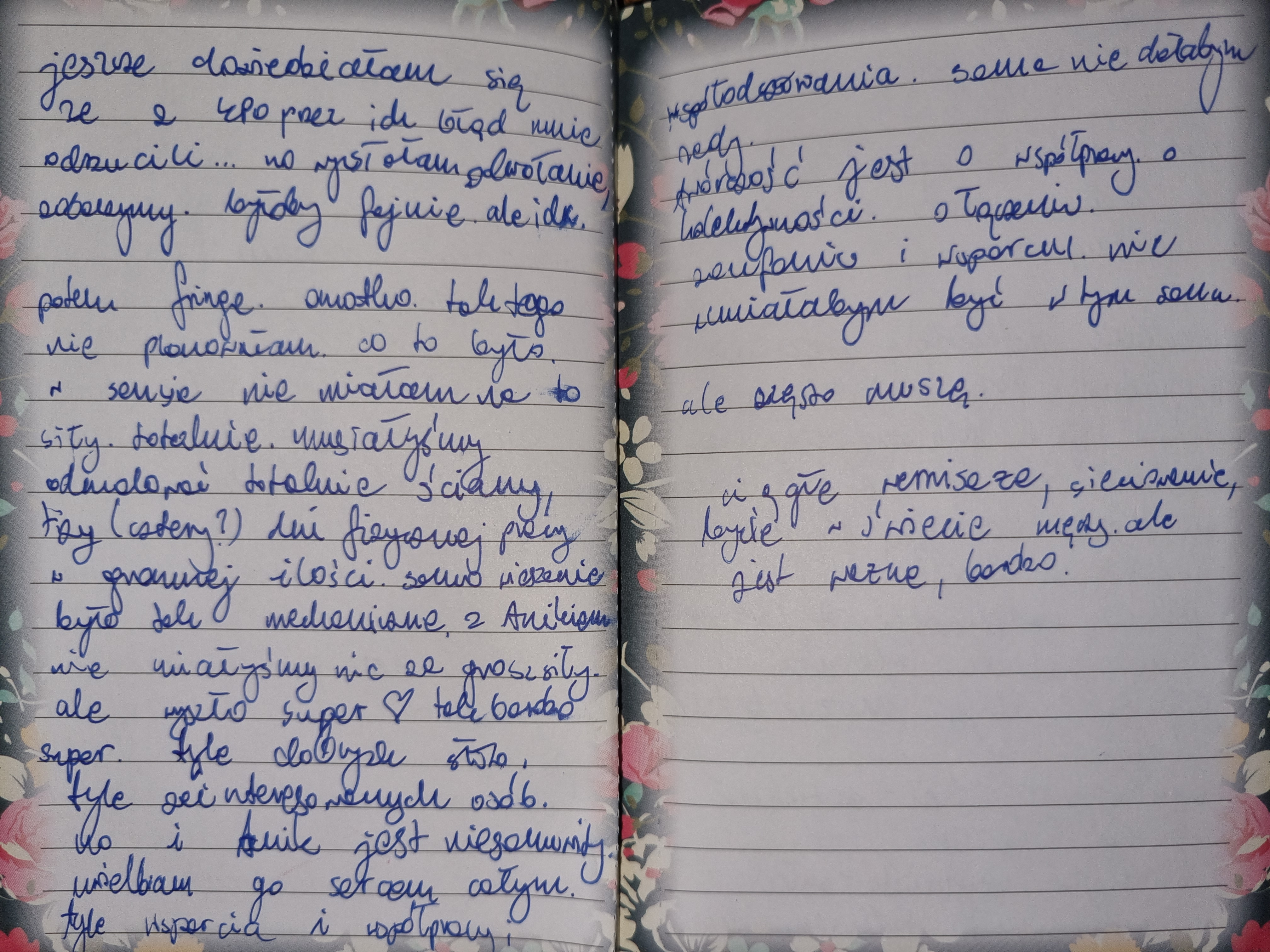
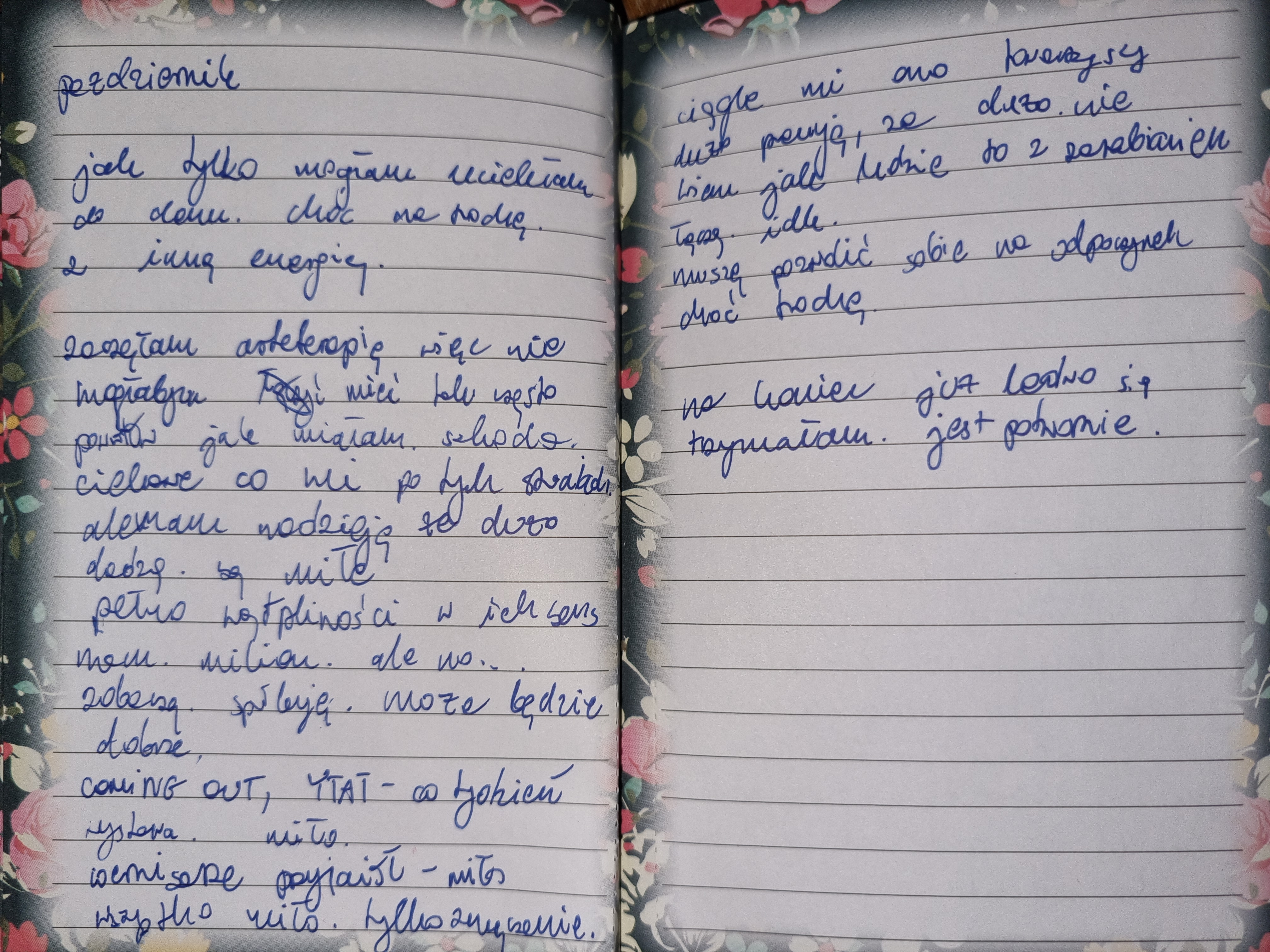
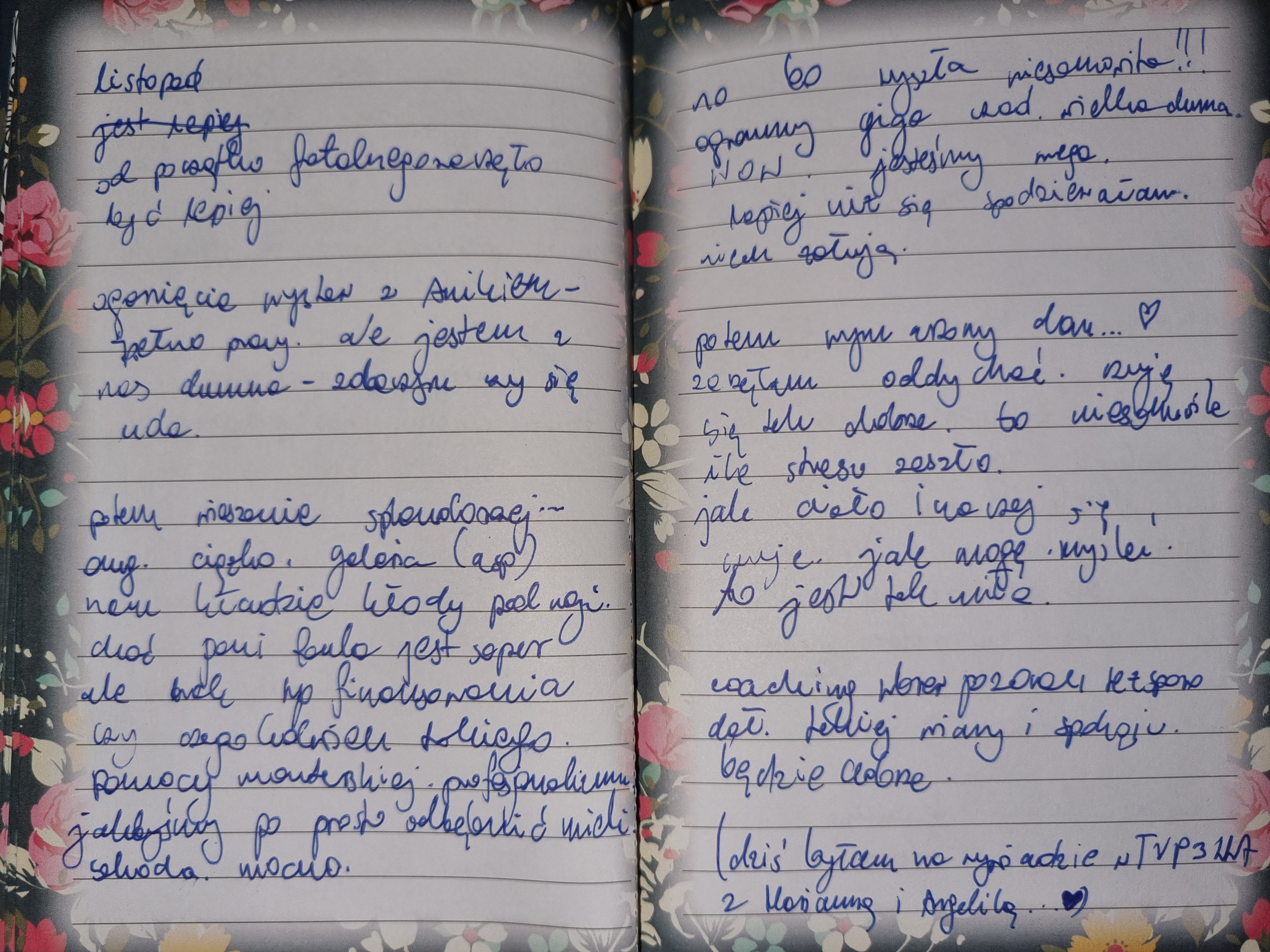
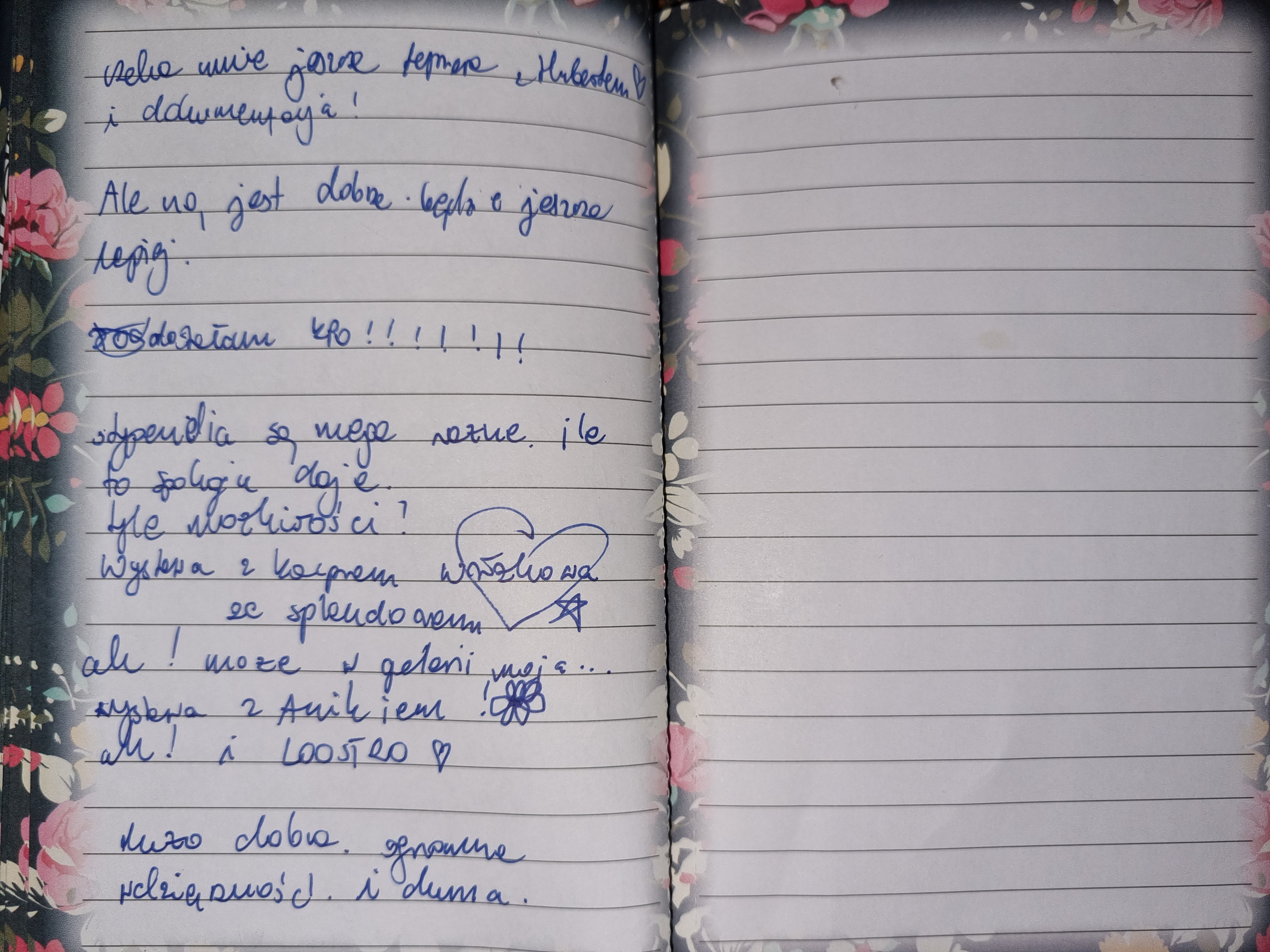
I have come a long way since the beginning of the WOK residency. When I review my monthly notes, I see an artistic and psychological development that I didn’t notice on a daily basis.
I feel immense gratitude and pride.
When I started, I was depressed due to a lack of exhibitions, rejection and self-doubt regarding my decision to become an artist. Without any specific exhibition plans, I knitted a series of tapestries—a processI found both satisfying and saddening due to the subject matter.
I was ready to give up and return to my hometown for good.
However, being accepted onto the residency programme made me decide to stay a little longer – I was reminded of how much I cared about art. Shortly afterwards, I was accepted for several exhibitions and competitions, and each success made me extremely happy. I started referring to my creative work as a job, which I found difficult because it sounded frivolous to me;after all, I was knitting. From that moment on, I had to knit more and more and faster and faster.
I soon became overworked. The combination of my textile work and overlapping deadlines resulted in hand pain and physical strain on my fingers. In search of rest, I returned to the lake to spend some quiet time with my family. However, I couldn’t relax there either because I was perpetually working on my doctoral thesis and knitting. I was losing strength and unable to strike a balance between work and rest. I love knitting; it has always calmed me down, but this time it was too intense. However, I gained the strength to continue creating, as well as self-confidence, by exhibiting my tapestries. I received messages from people saying how moved they were and how they felt seen.
Over the past few months, I have had some critical conversations with artists, received incredible support and developed a real sense of community. I believe in our generation’s focus on collectivity rather than competition. Although I wasn’t accepted into doctoral school this year, I am not giving up and will try again next year. In the meantime, I have begun studying at Maria Grzegorzewska University, aiming to acquire knowledge in art therapy that will enable me to support others through the therapeutic power of art.
November began with an exhibition with my collective – the final one planned for this year. It turned out beautifully, and I am incredibly proud of us all. During the opening and the following morning, I experienced immense joy. I did it! I made it through this exhausting time and didn’t give up. I can act more calmly now. My body and mind have breathed a sigh of relief.
Thanks to the residency, I was able to focus entirely on my work and personal development, free from financial worries. Although I was overworked, I confirmed that the path I had chosen was the right one. However, I realised that I needed to find a balance and set priorities, which I achieved through coaching. During this time, I also planned tasks for the coming months. I improved my public speaking, documentation and tempera painting skills, strengthening my sense of professionalism in the process. I can now see more clearly what lies ahead in my career as an artist, and I feel that I have the tools to cope better with any difficulties that arise. I have discovered that I am still passionate about creating art and want to share this love with others.