



Zoi Michailova
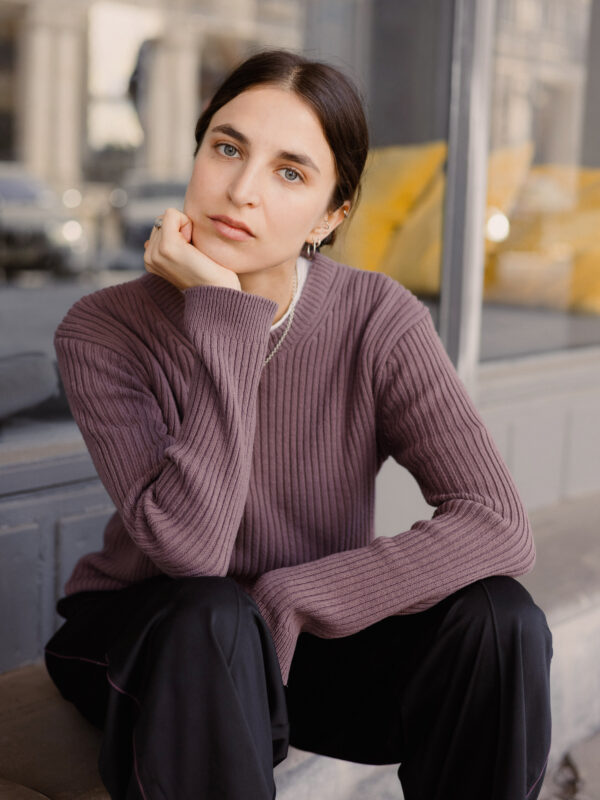
For me, the starting point is experimentation, understood as a shift in perspective, a move beyond established ways of working with sound. Until now, the visual/spatial layer in my solo projects would emerge after the sound composition has taken shape, rather than as a parallel element of my practice. During this residency, I want to develop a visual language and explore how it can function alongside the composition – not as an illustration, but as a form that shapes its reception.
I am interested in thinking of the ‘map of memory’ not merely as a sound piece, but as a spatial situation – a way of being present and of experiencing it. I am seeking a form that will allow me to move beyond the album format and open up the possibility of further developing the work, for example towards a sound-based installation. At the moment, it is not about creating a specific object, but rather about exploring the relationship between sound, image and space – and how the memory of a landscape might find its appropriate ‘body’. I see this residency as a time to redefine my tools and expand my artistic language.
I am a sound artist, composer and music producer. I come from Ukrainian Crimea and I have lived in Warsaw for over a decade. I compose music for the visual arts, including theatre, performance art, video art and installations. In my work, I explore the relationships between memory, the soundscape and the auditory imagination, using field recordings, electronics and my own resonant installations. In Poland I have presented my own projects and collaborations, including on stage at the Juliusz Słowacki Theatre, at the Ujazdowski Castle Centre for Contemporary Art, Zachęta National Art Gallery, Museum of Modern Art in Warsaw, as part of the silent film festival ‘Sounds of Silents’ and festivals such as Ephemera in Warsaw, Malta in Poznań or Solar in Katowice. For years I co-created a queer and feminist collective Kem.
Residency summary
The residency was, for me, a time of experimenting with expanding my own practice — I explored how thinking about composition can function beyond the medium of sound itself, through working with object, material, and space. Thanks to meetings with mentors from the fields of sound art and sculpture, I was able to look at my own work process from a different perspective.
My most important discovery was that I don’t need to change my process in order to create an intermedia work. I still start from emotion, then look for the materials, instrumentation, or form that will let me express it.
The project I began the residency with became a starting point for experiments in creating my own sound objects. While working with Radosław Sirko, I worked with DIY electronics, soldering, building synthesizers, noise boxes, and speakers, as well as prototyping with Arduino. I explored how particular sonic qualities could be translated into physical form.
Meetings with Gizela Mickiewicz allowed me to look at object-making from a sculptural perspective and to see the similarities between working with material and composing music — in both cases, the choice of tools and form stems from the original idea.
Having a production budget allowed me to conduct research and experiment through hands-on practice: I could buy materials and tools, test out solutions, and simply build up my skills in areas I found interesting.
I’m finishing the residency with new tools in the field of visual art, and I’ve also discovered new directions for developing my practice. The very personal project that served as my starting point here has remained an important reference point for further experiments with sound, material, and form.