


Natalia Kalicki / Milena Soporowska
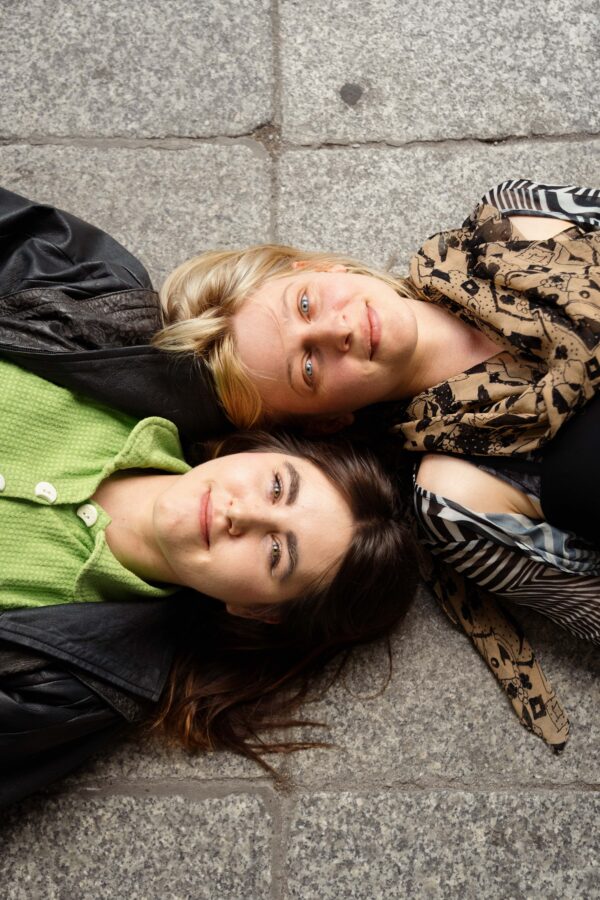
We are applying for the programme because the residency encourages reflection. This is an important stage in the artistic process that often lacks time and support because the focus is mainly on the final product.
For us, resilience means establishing sustainable practices of work and rest within shared spaces and shared time. Resilience here means developing modes of engagement, with each other and with nature, which will last in the long run, and which occur collaboratively, responding to our own and our neighbours’ needs. Resilience is rooted in what is simple, repetitive and seemingly unspectacular.
We also understand resilience as a way of adapting and searching for one’s own inner rhythm. This involves finding and adapting to a pace that is ‘drowned out’ by the hustle and bustle of city life and the demands of contemporary, technology-driven culture, with which the human body can no longer keep up.
Inspired by Ursula K. Le Guin’s essay The Carrier Bag Theory of Fiction, we are therefore looking for a new narrative: a vision of the future based on the model of the unhurried ‘collector’. This is a process-based approach, where various experiences are gathered and a sense of community is built on a practice of everyday gestures. The ‘gatherer’ establishes new relationships and nurtures existing ones, allowing time for reflection.
We think true, long-term resilience cannot be achieved in haste or chaos. This is why we focus on a joint journey, spread out over time and divided into stages.
During the residency, we would like to create a space where we can learn, through rest, at our own unhurried pace. We have access to a plot of land near Warsaw, that has been vacant for years and requires maintenance. As an alternative to expensive urban premises, we are considering using the cottage-hut as our temporary open art studio, and as a place for knowledge exchange. We have tentatively called our project The Allotment Academy. We are interested in alternative forms of education that are based on mutual exchange and are process-oriented. During the residency programme, we would like to interact with our neighbours, the other allotment holders, by inviting them to meetings and encouraging them to share their specialist knowledge of gardening, land maintenance, and the surrounding nature. At the same time, we plan to invite specialists, to lead workshops, walks and open discussions, which will be open to the public. By making our space available to others, we would like to explore how our quasi-institution could function as an ‘academy of respite.’
The budget would be allocated to organising meetings with the aforementioned guests, and to purchasing material for workshops.
In return, we would expect you – those of WOK, to provide substantive support in building relationships with the community, an opportunity to consult on organising meetings and the possibility of networking with other residents. Above all, we would expect you to trust us and our process.

Natalia Kalicki
Milena Soporowska
A Space for Rest
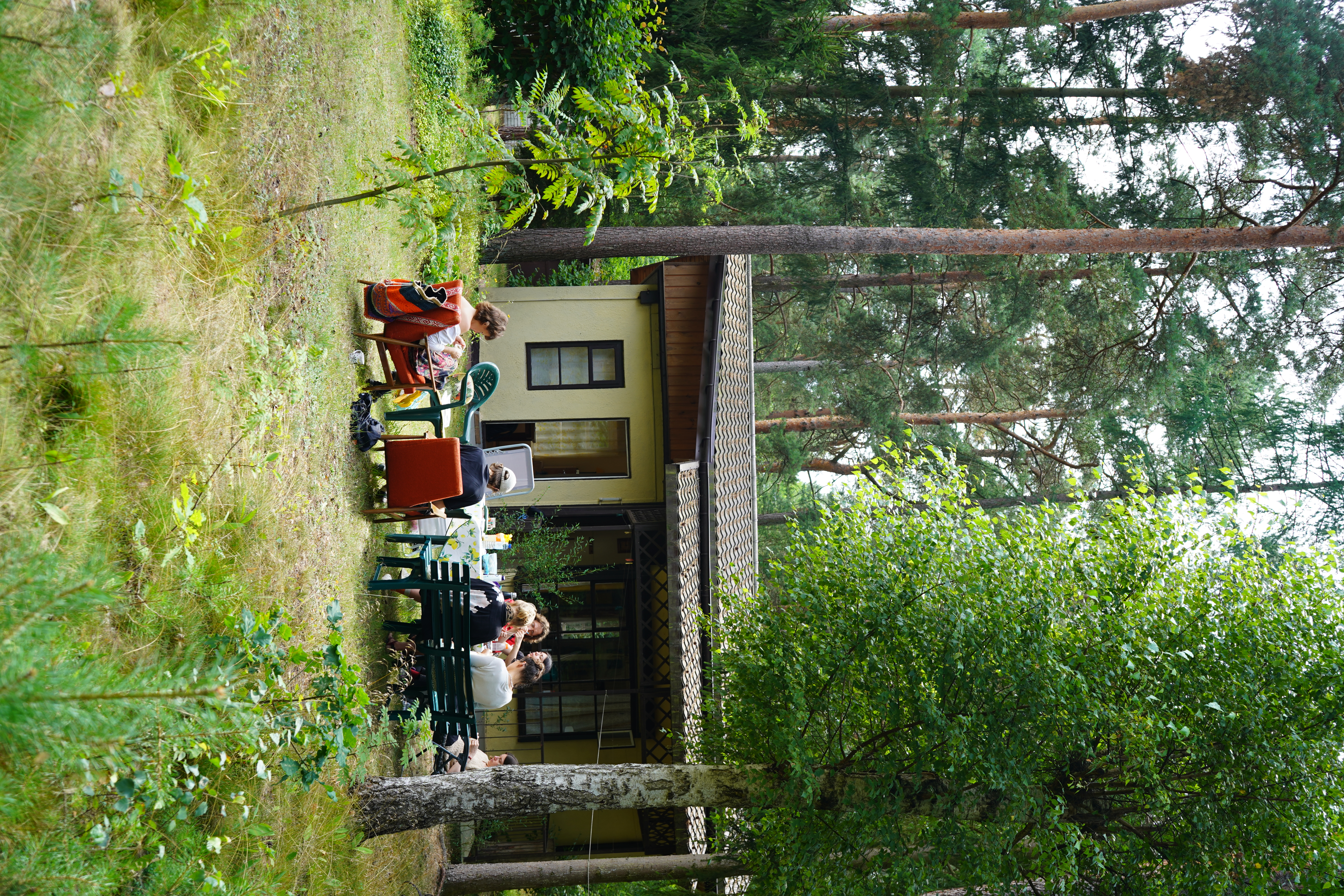
During our residency with WOK, we wanted to test the ‘Działka’ forest allotment as a site for creative experimentation and peer-to-peer education, as well as a way to hold space and rest together.
We wanted to test the space ourselves and open it to others. During the Działka season, we organised a series of public workshops with a focus on practices of gleaning. We prioritised collaborative modes of engagement with each other, practicing attuning ourselves to the rhythms of the forest, in space and time away from the usual urban hustle and the constant pressure of multiple obligations.
The model of the unhurried collector
Our method took on a principle Tricia Hersey names rest as resistance- where naps and daydreaming are key to healing and to resisting the conditions of late capitalism. This proved no easy task. Reading Jonathan Crary’s work reminded us that in such conditions, the demands of capitalism extend to the most internal and private of endeavors: our dreams. From the get go we were also inspired by Ursula K. Le Guin’s essay The Carrier Bag Theory of Fiction, to look for new narratives that re-frame what matters most, especially when we base these visions of living on the model of the ‘unhurried collector’. The concept of gleaning reinforced our process-based approach, in which various materials and experiences are slowly gathered and a sense of community is built through everyday gestures. On the Działka, the gleaners gather time, establish new relationships and nurture existing ones, allowing time for play, pause and reflection.
What comes next? Rest and resilience in the long term
Throughout the residency, meeting other artists in the context of WOK was an important tool to further reflect on these conditions that define the precarious reality of our lives.
Taking these texts and practices as a starting point, we reflected on the structural possibilities of building a sustainable para-institution through the possibilities of the Działka project. Our process became an ongoing rehearsal in how to lean towards resilience. At the end of the residency, with the support of WOK we had the chance to consult specialist Łukasz Jaskółka about registering a foundation. This presented another opportunity to consider the long-term structural possibilities of the Działka.
Our collective public gatherings included:
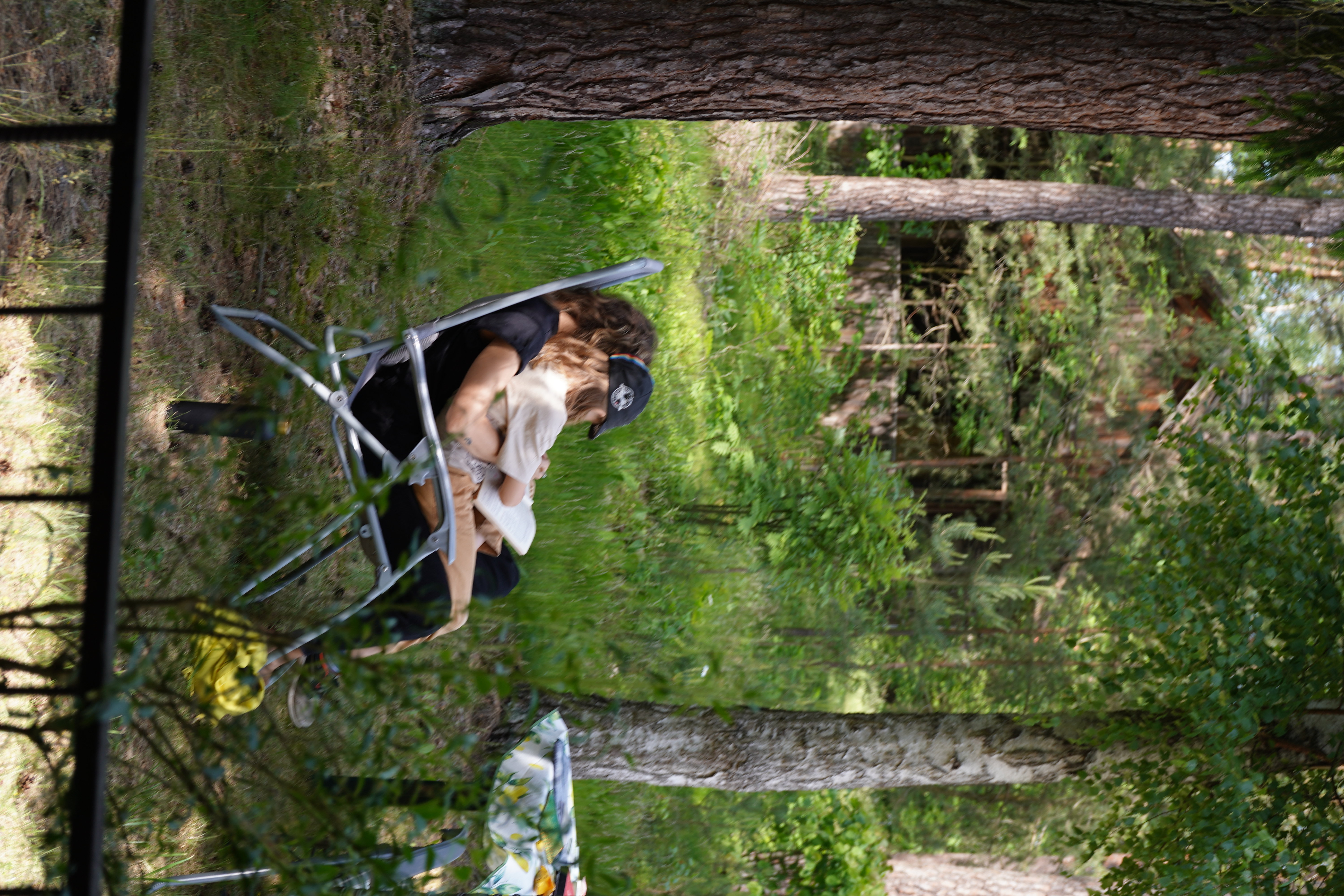
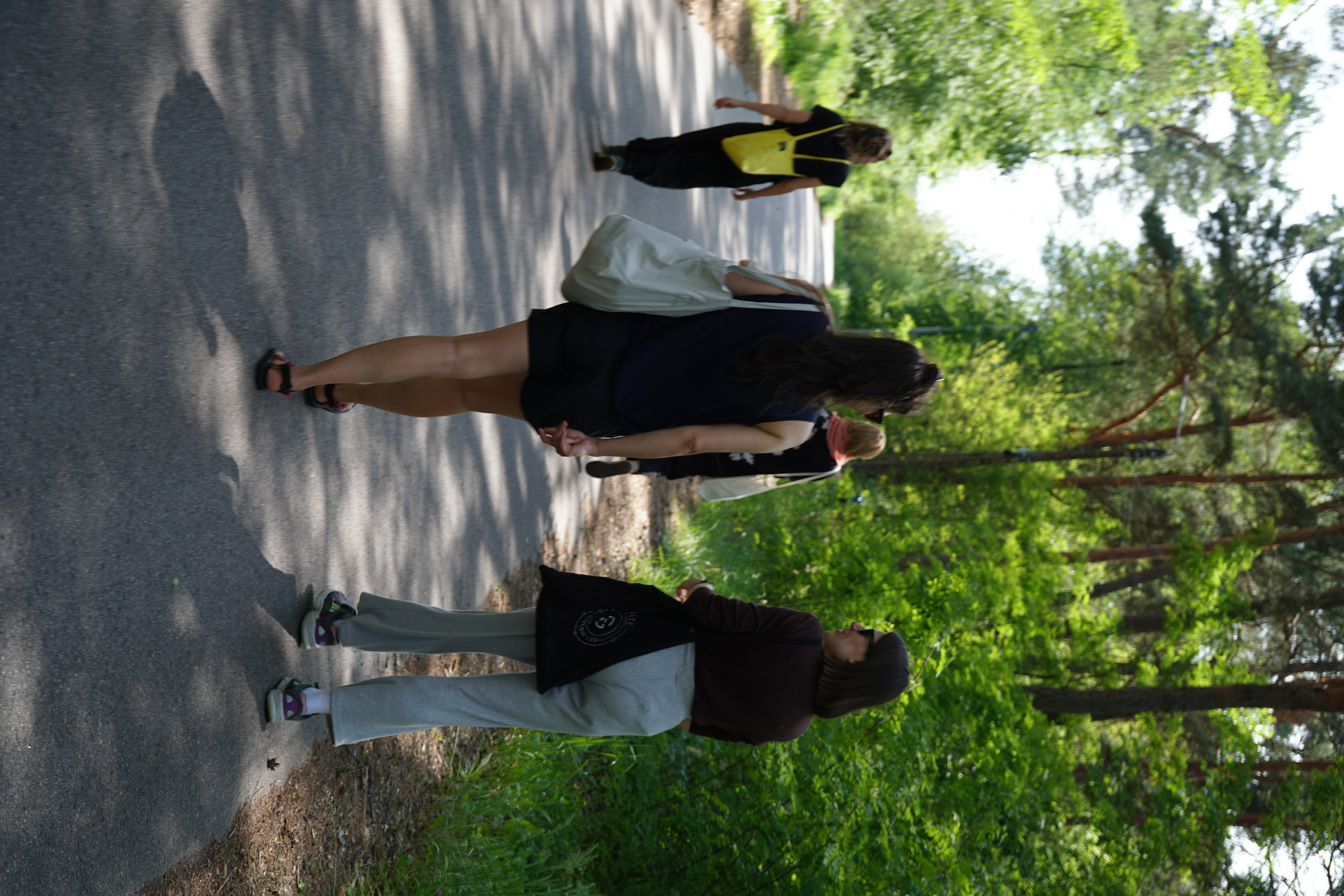
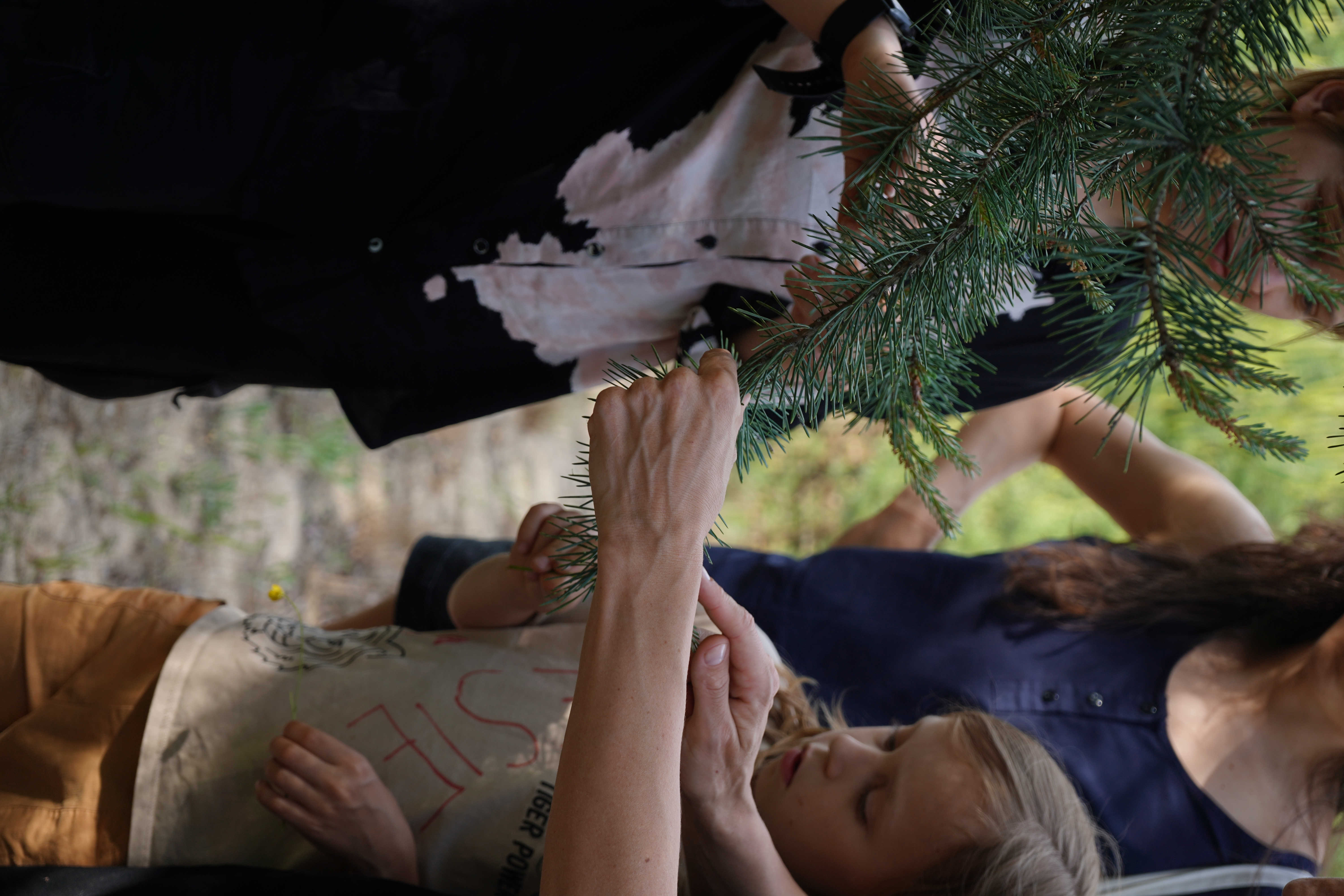
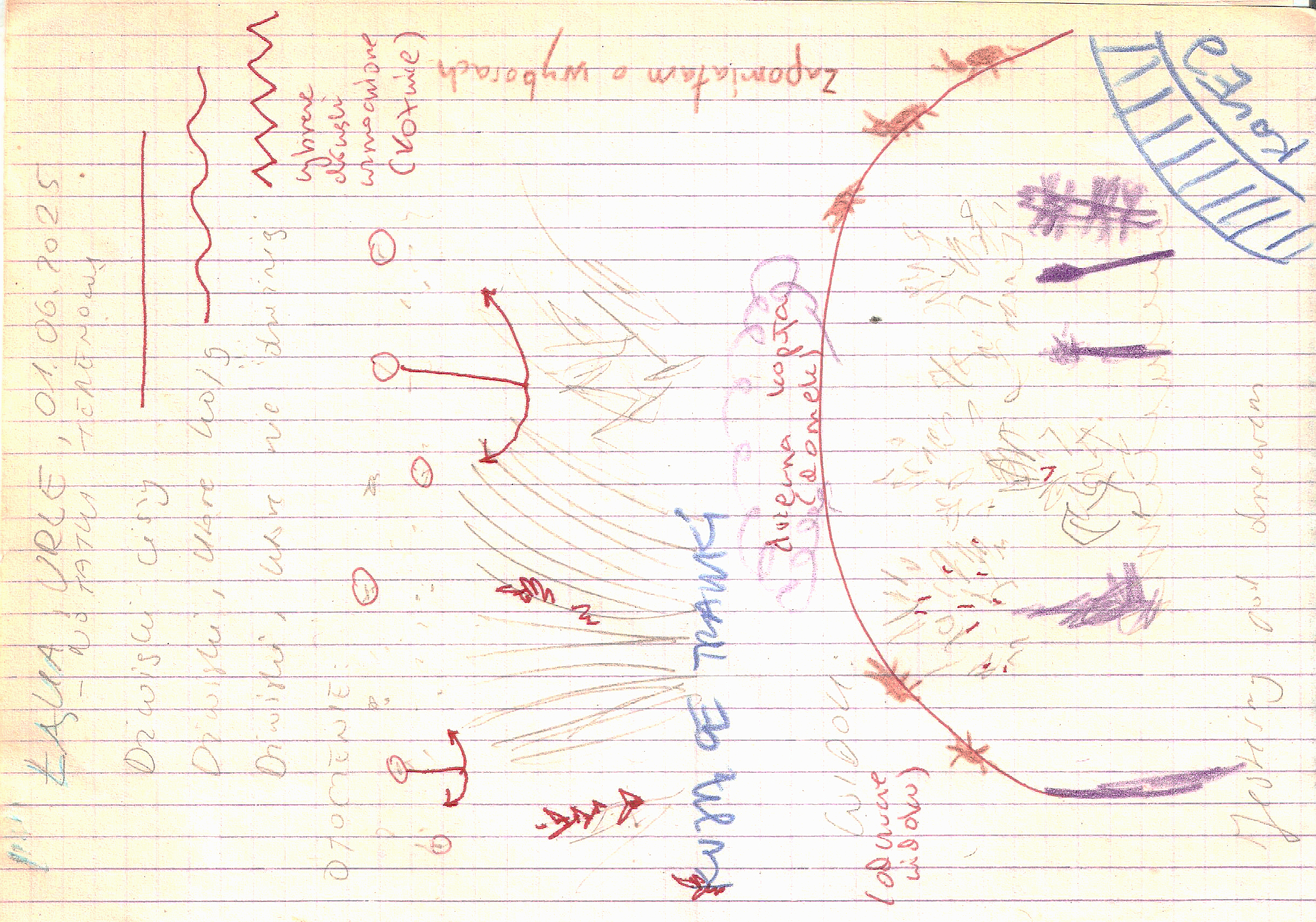
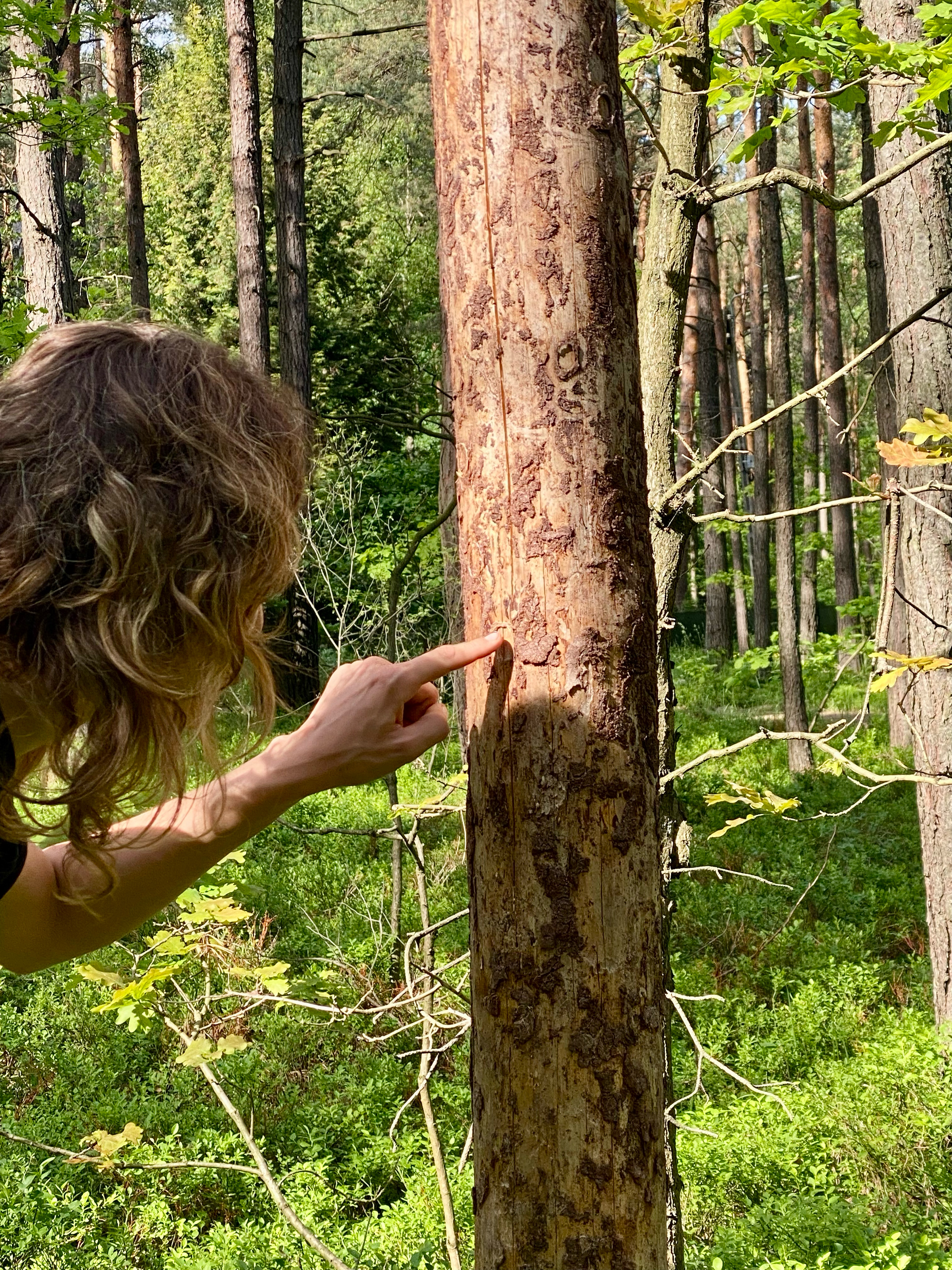
01.06.2025 | Visiting Forests and Fields | A workshop with artist and biologist Krysia Jędrzejewska-Szmek
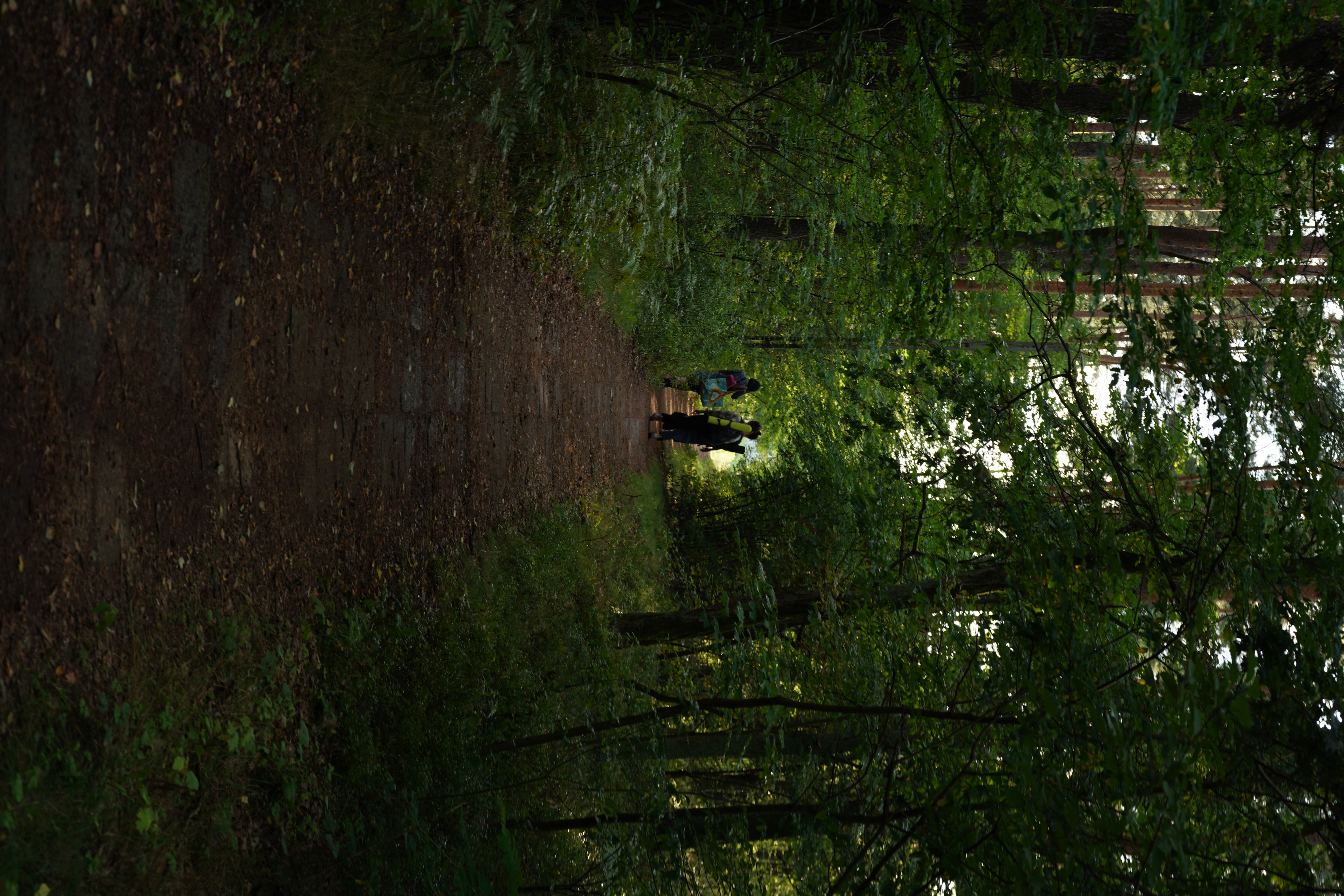
Together with the artist, we headed out into the local terrain and grounded our knowledge in the relentless murmur of the meadows, and oak and pine forests, and among the carpets of blueberries and moss. Krysia taught us new tools for listening, drawing and note taking, and for getting to know the local flora and fauna.
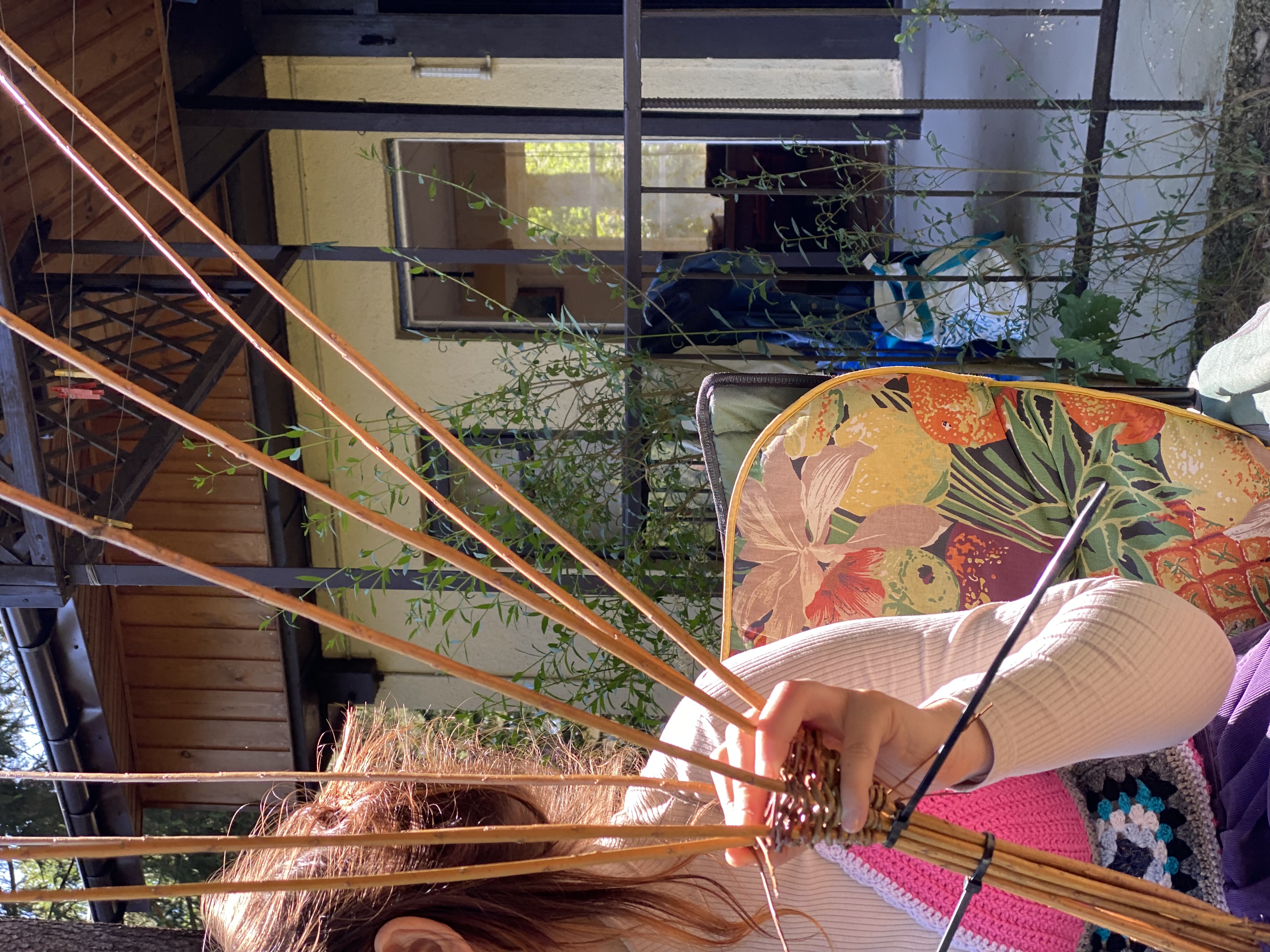
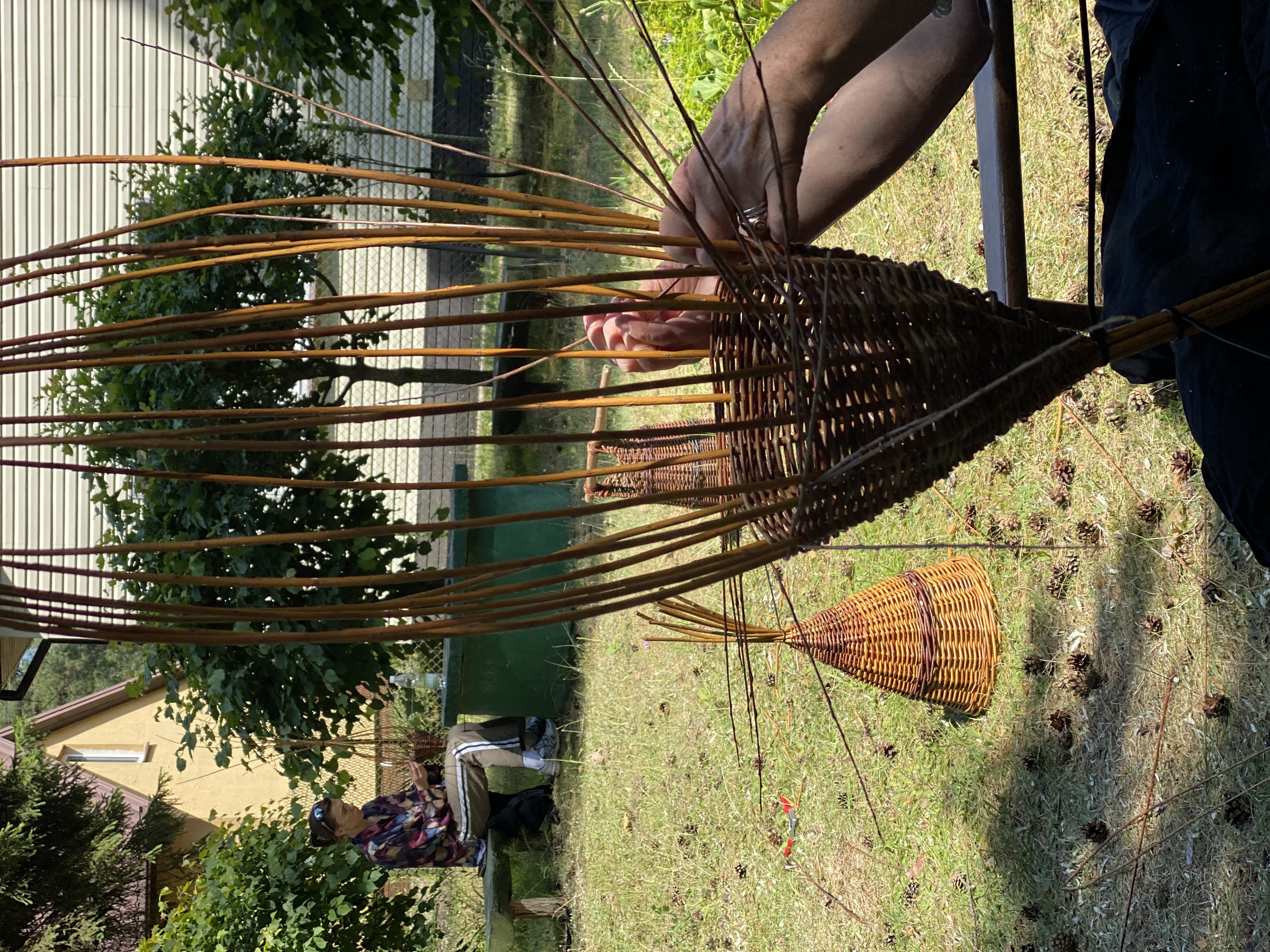
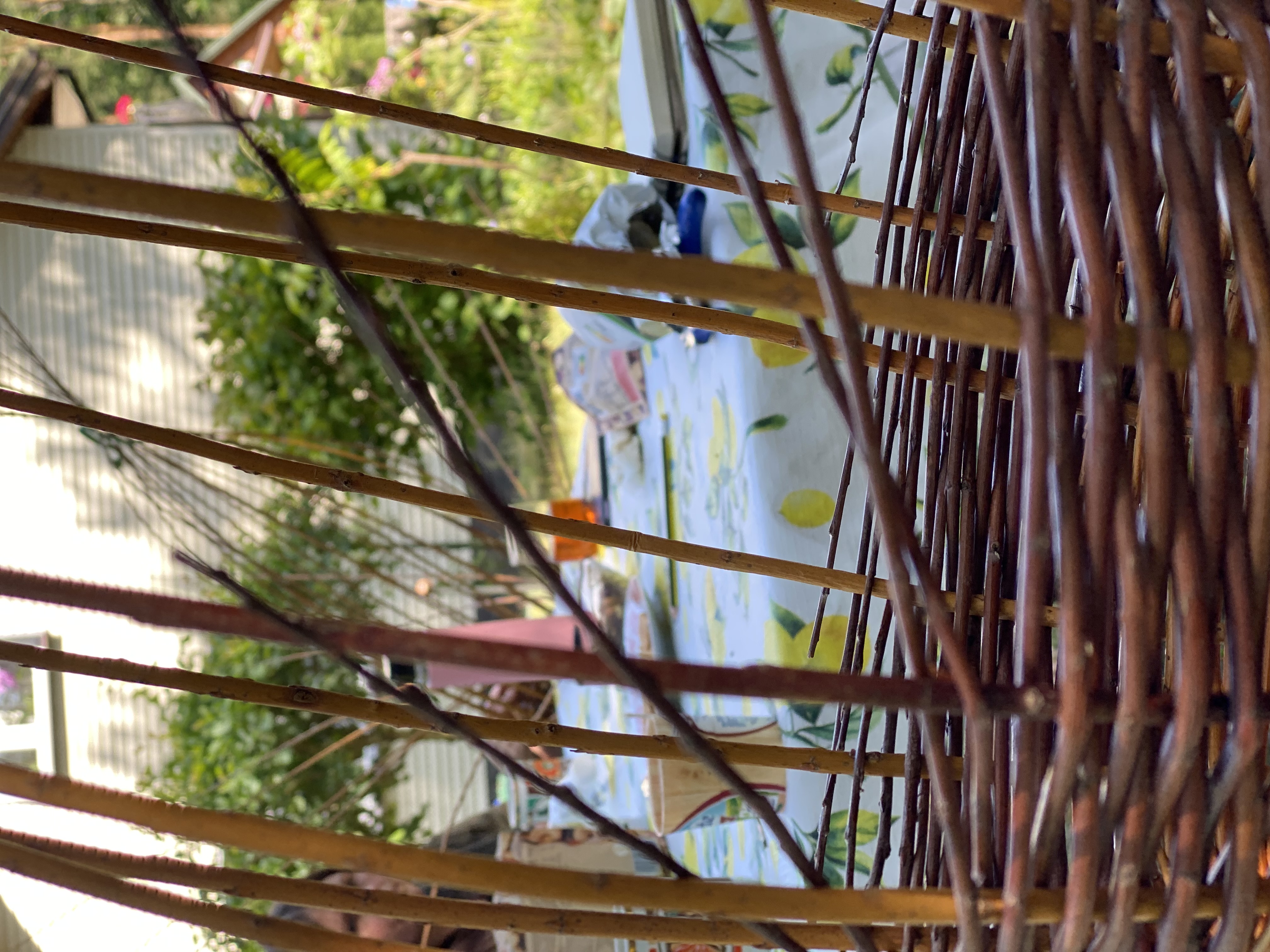
21.06.2025 | Weaving the Unhurried Collectors Basket | A workshop with Anna Elsner, a specialist in artisanal basketry
With the summer solstice upon us and with Ursula K. Le Guin’s Carrier Bag Theory of Fiction in mind, we wove vessels in preparation for new narratives. In weaving we learned about repetition as a calming agent.
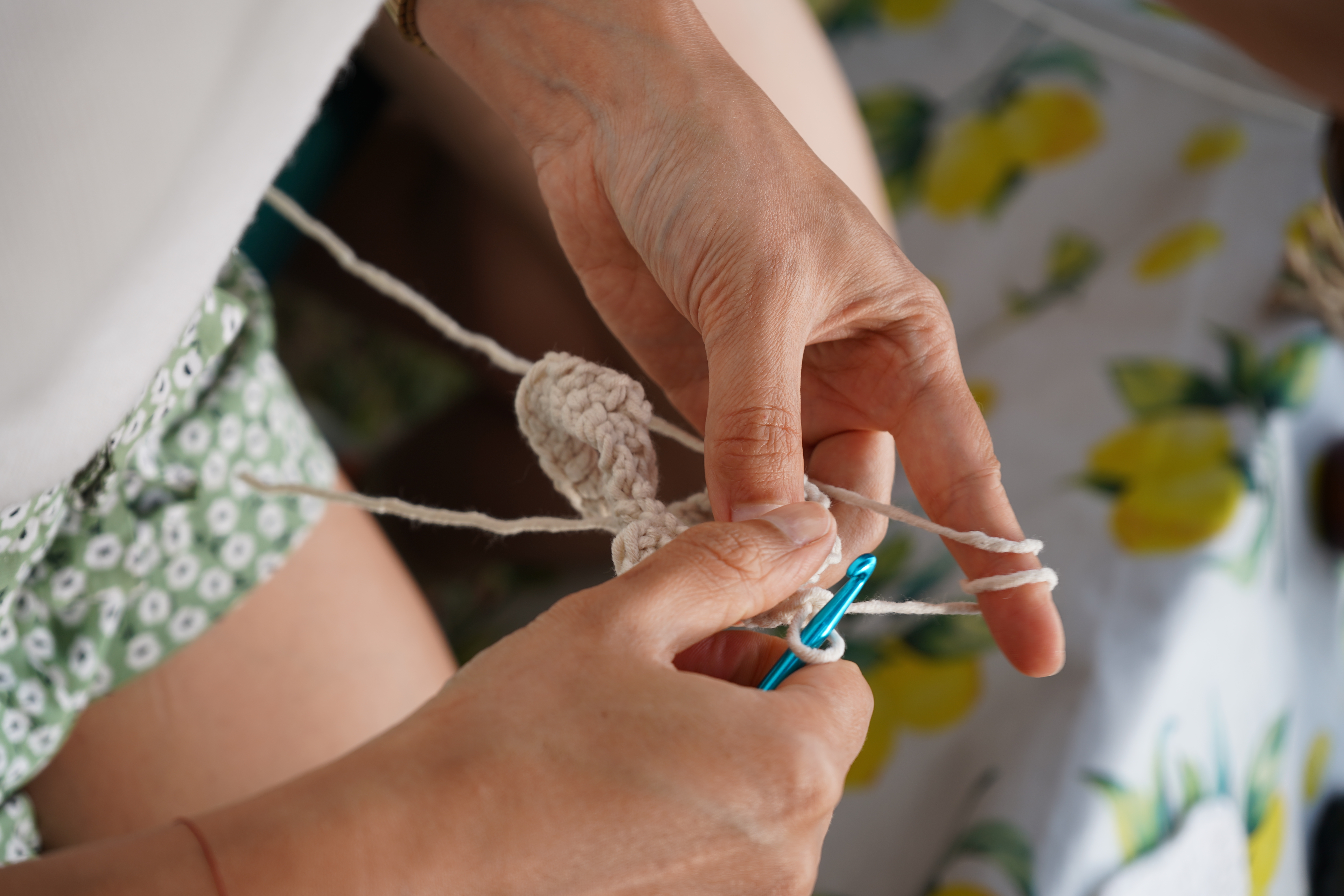
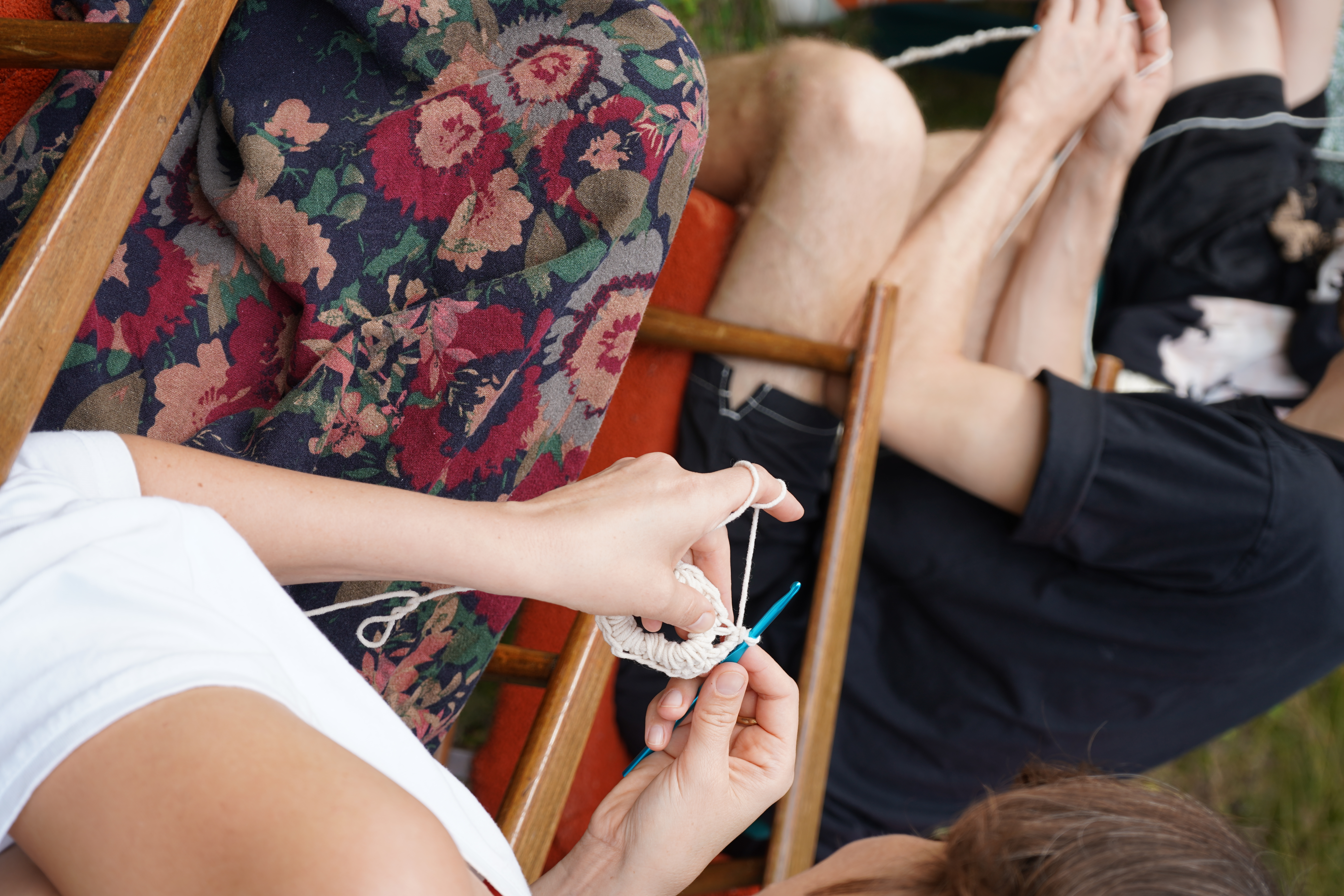
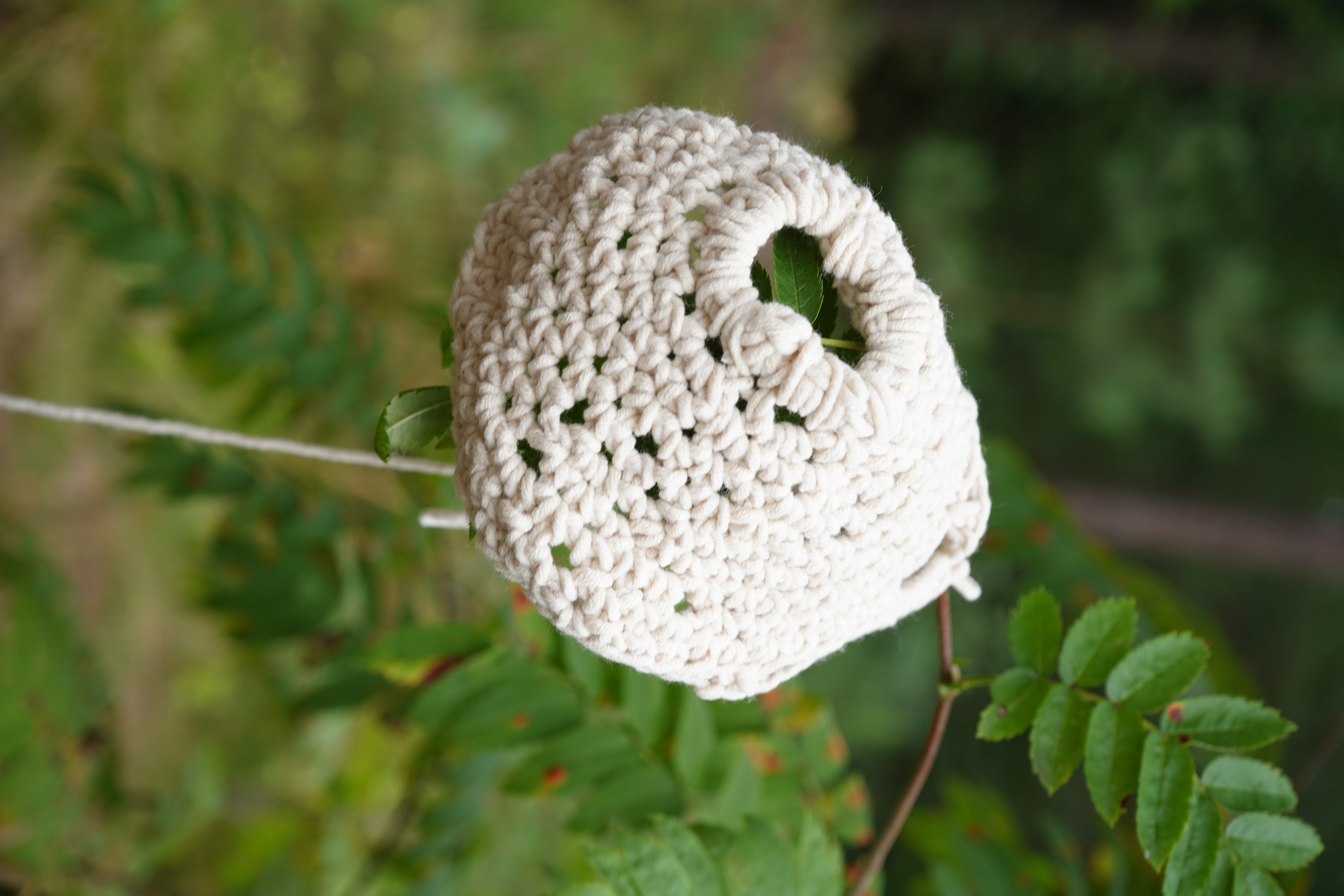
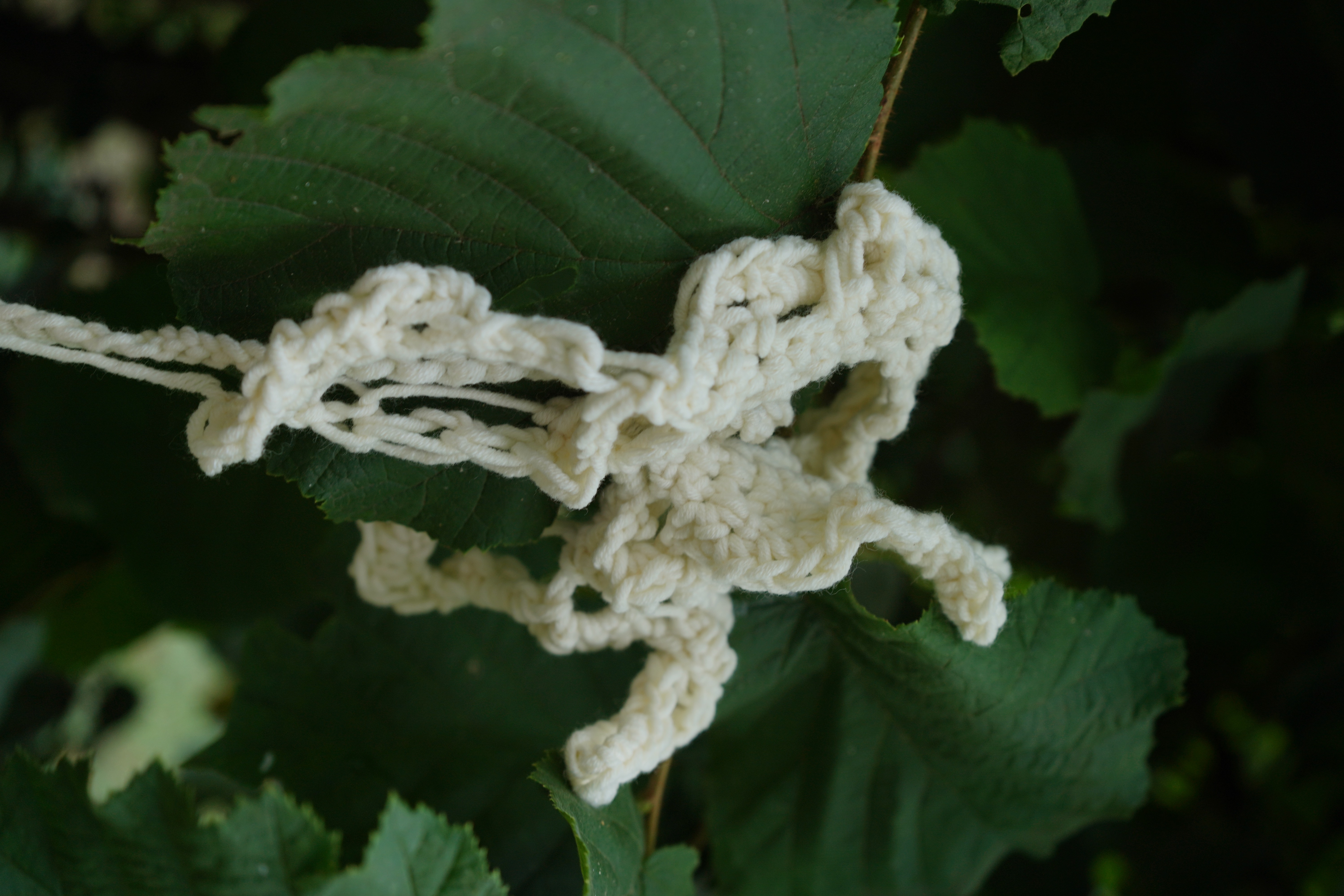
27.07.2025 | Crocheting a Common Mycelium | A workshop with artist Weronika Galdamez
During the crocheting lessons, we learnt how to create an ‘abstract mushroom’. Rather than aiming to produce a particular shape or item, we created the time and space to experiment with the form itself. Through this slow practice, we discovered a kind of openness to the possibilities of play when learning a new skill.
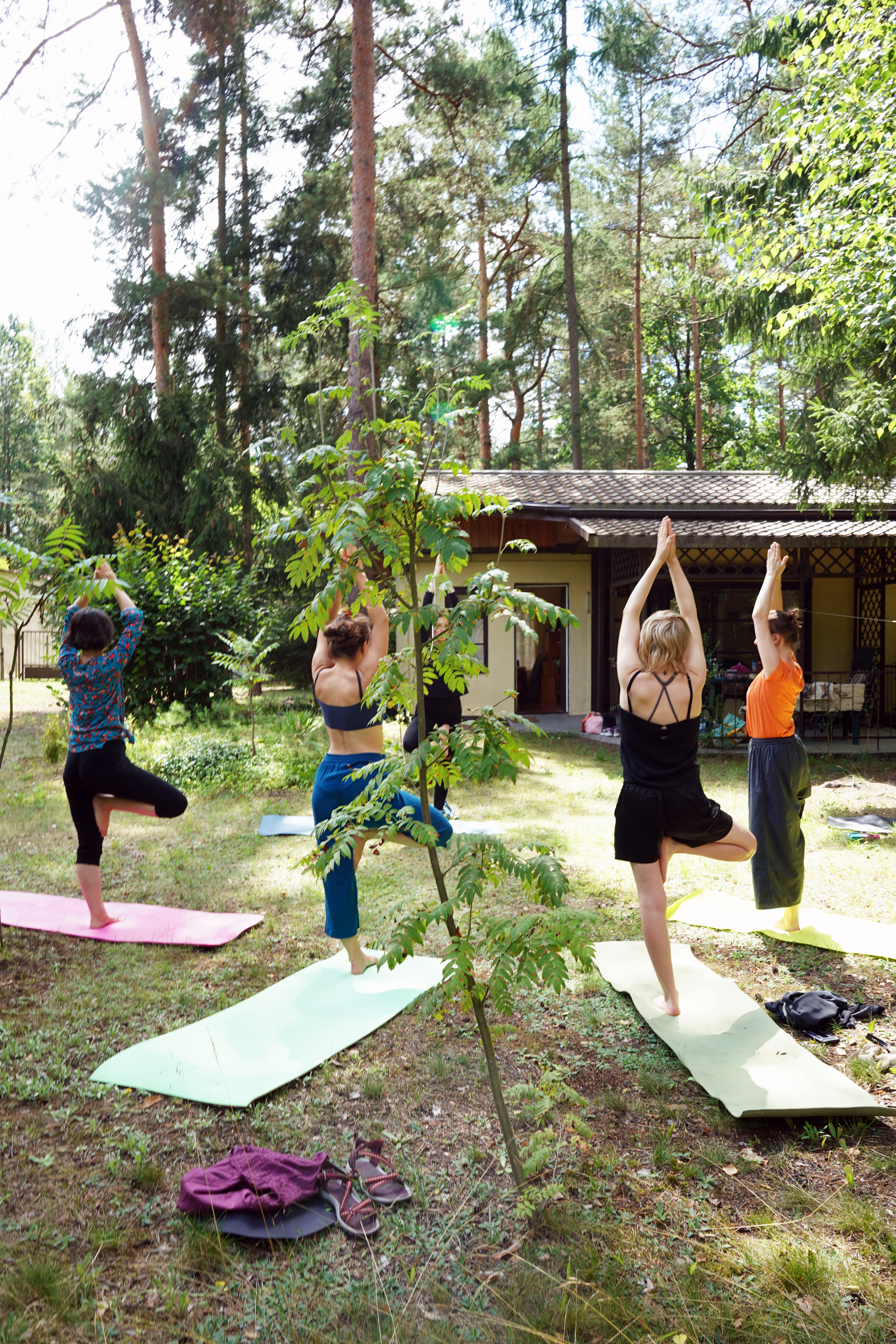
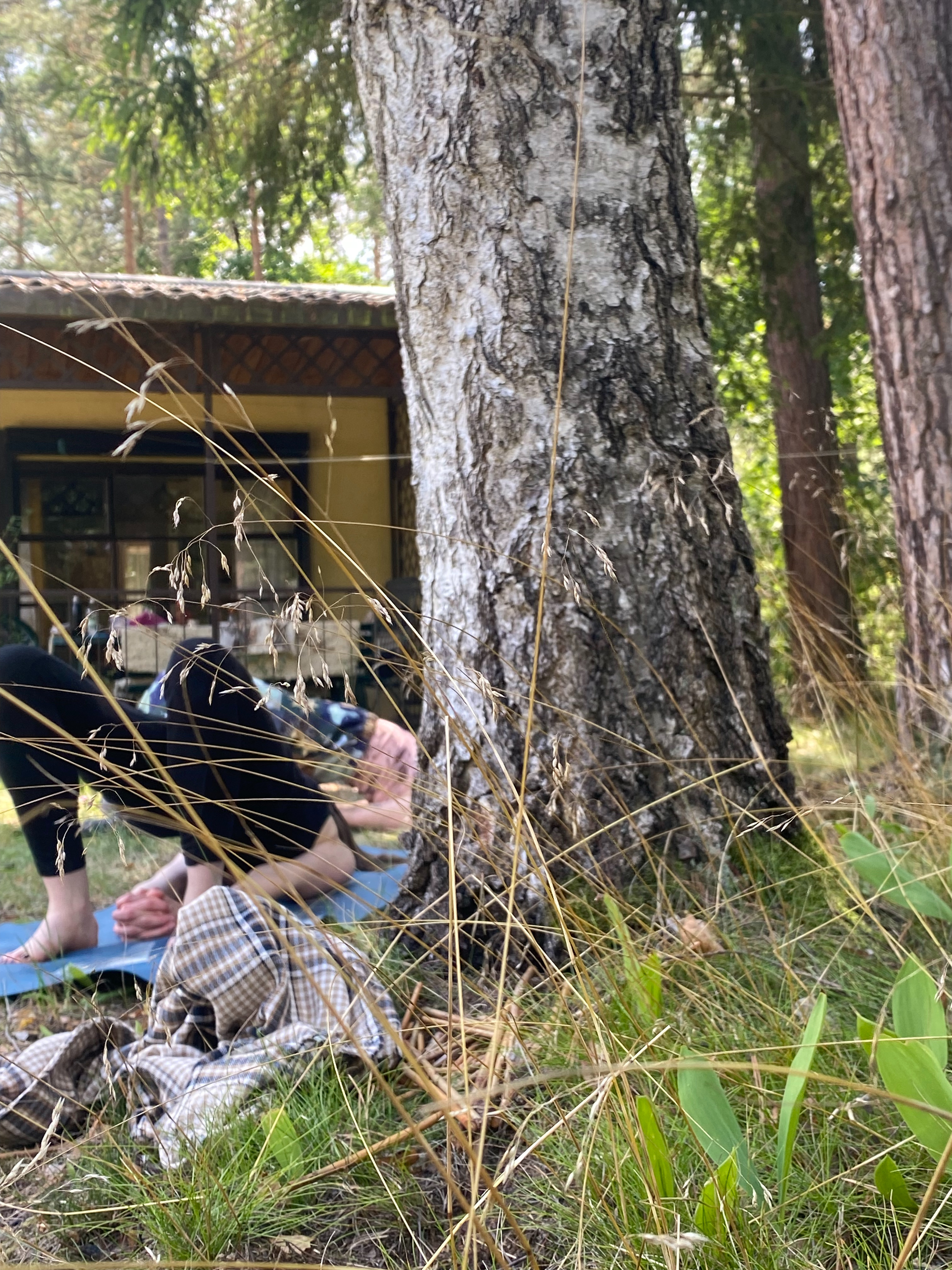
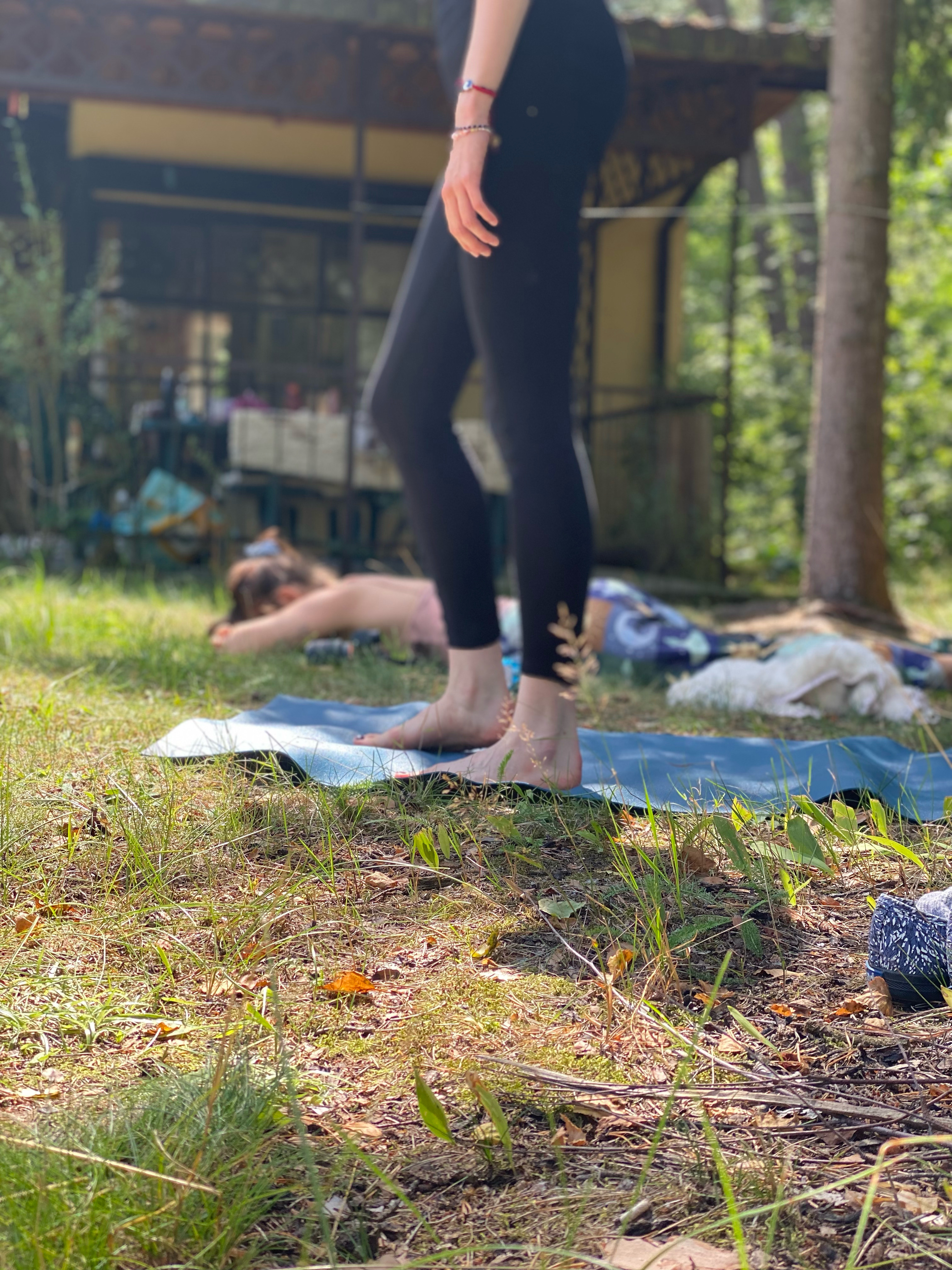
02.08.2025 | Grounding Ourselves and Returning to the Body | A workshop with director, dramatist and yoga instructor Monika Czajkowska
We finished the series of public events and a yoga session led by our fellow WOK resident. Monika Czajkowska helped ground our tired bodies during a two-hour session. Together we tested our limits, learned to breathe, and practiced patience in body and mind. Many of us realised we often do not have the time, nor make the time, for healing practices. We spent the rest of the day exploring the area of Urle and around the river Liwiec.