


Anna Karpowicz
I actively collaborate with composers in Poland and around the world, and have performed over a hundred world premieres, including flute concertos, chamber music and solo works. I seek out new means of expression by developing my own extended performance techniques, but in contemporary music I am most interested in contextuality and the creation of meaning.
My experiments with the presentation of classical and contemporary music, and my passion for narrative programming, have always remained within the scope of my role as a classically trained flautist and have not gone beyond the boundaries set by my degree from HfM Detmold. Although I have received many awards ‘for courage’, a barrier has emerged in my artistic work that is difficult to overcome.
Combining my roles as a flautist and curator, I have often composed my own pieces out of necessity or inspiration. It was on my initiative that albums such as AVE VIRUS by Hashtag Ensemble or SYRENA:RE recorded for FSR with Dominik Strycharski were created. I wrote two site-specific pieces set to the poetry of Irena Klepfisz, which were broadcast on Radio Two – a dream come true for many a composer in Poland. Despite this, I have never identified myself as a composer.
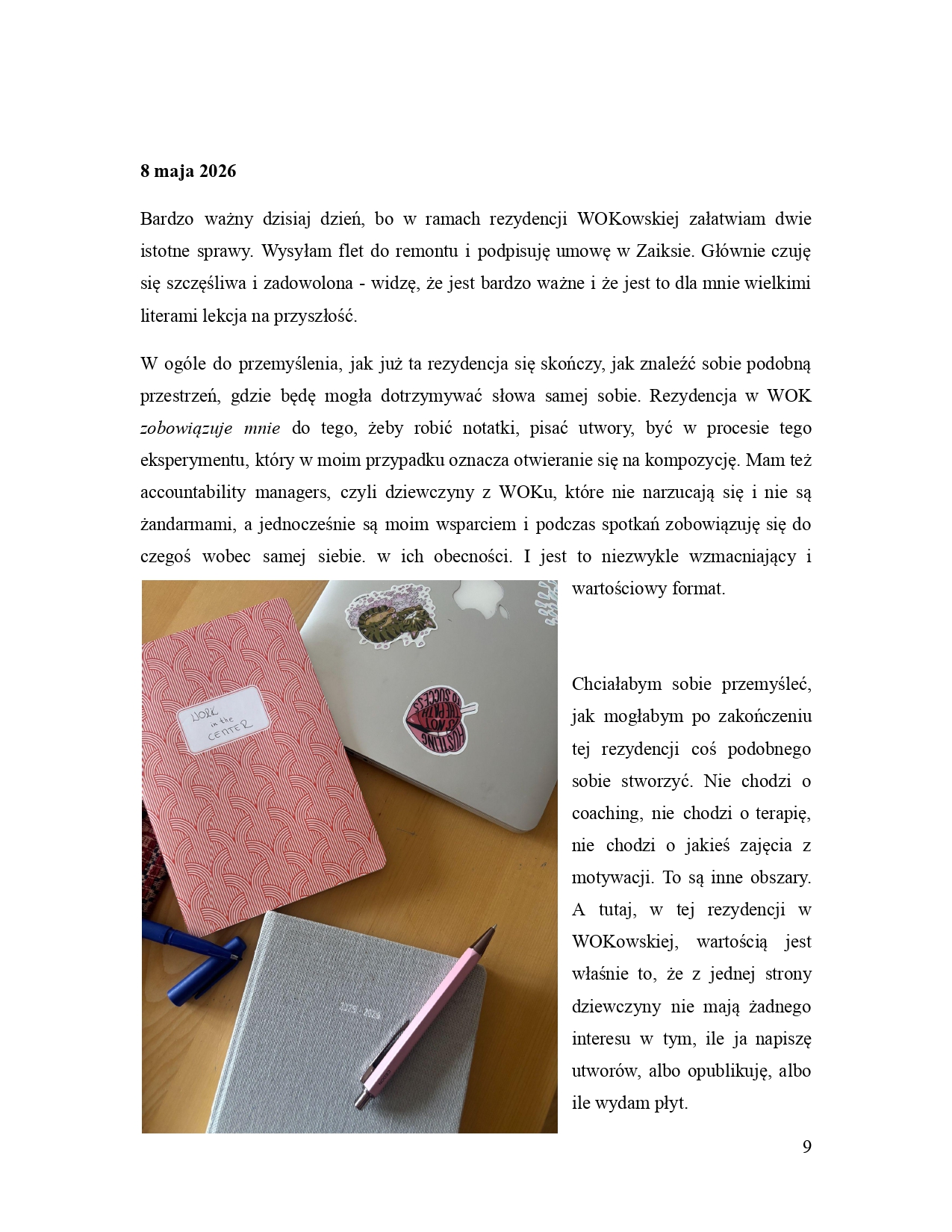
My residency at WOK is not only intended to help me embrace a new and more direct form of expression, use new tools and explore new ways of practising art, but above all to ‘come to terms with’ my new role – that of a composer.
An EXPERIMENT begins in the realm of meaning-making, in the sphere of the imagination and fundamental beliefs – who I am, what defines me, and what is possible for me. Every artistic form is created within the boundaries set by the artist. My task during the residency at WOK is to work on pushing those boundaries.
I have been working in music continuously for 25 years; I graduated from the Detmold University of Music, and I am a recipient of the Polityka Passport Award and the Koryfeusz Award for Polish Music, alongside the Hashtag Ensemble, which I founded. I have been awarded the ‘Meritorious to Polish Culture’ Medal, as well as two Fryderyk Awards. I was a fellow at the European Music Council and graduated from the Leadership Academy for Poland. Last year, I was nominated for Forbes magazine’s Woman of the Year award for launching the Droga Dō festival.
Together with Marek Bracha I run the WarszeMuzik festival, bringing classical music to the remaining tenement houses in the former Warsaw Ghetto. I co-founded the Mieczysław Wajnberg Institute, named after one of my favourite composers. I co-founded Hashtag Lab as a Community Cultural Institution, initiated the AżTak Festival, and managed its repertoire programme. I programme the international Droga Dō festival, in which concerts in Japan play a special role.
My favourite genre is chamber music, and my mission is to create warm and authentic gatherings that revive the tradition of making music at home. Hence the WarszeMuzik courtyard concerts, the establishment of Hashtag Lab in an old villa, the ‘Mietek’s House Party’ initiative at the Wajnberg Institute, and the sound installation at the Sugihara House as part of the Droga Dō festival.
I am unable and unwilling to divide classical music into historical and contemporary, composed and improvised, notated and intuitive, a fact reflected in the seventeen albums I have recorded for ANAKLASIS, KAIROS, Bołt, DUX, FSR or Requiem Records.
Residency summary
My residency at WOK turned out to be something more than time set aside for professional development under the banner of “experimentation.” I began it with a sense of uncertainty, feeling as though I were standing before a door I hadn’t opened in a long time, even though I knew that an important part of myself lay behind it. For many years I functioned primarily as a performer, curator, and organizer of musical life — someone responsible for projects, ensembles, festivals, and other people. This residency, however, allowed me for the first time to say to myself, consciously and without excuses: I compose, and I want to put my name to my own music.
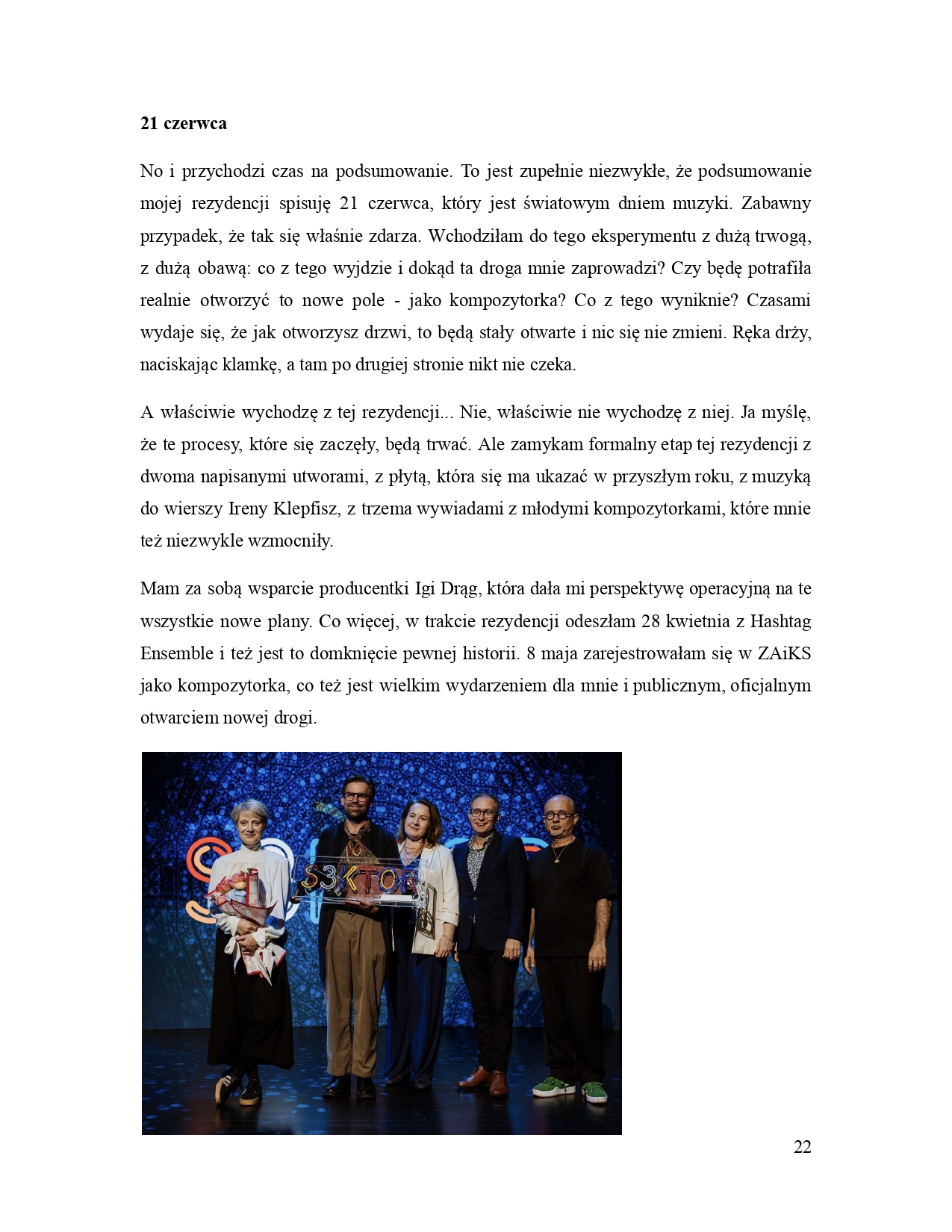
The most important experience of the past three months was finding the courage to step into this new role. It wasn’t only about writing pieces or starting new projects. Far more important was an internal shift — allowing myself to see myself as a composer. It turned out to be much harder than any technical or organizational matters to deal with. Registering my works with ZAiKS, which from the outside might have looked like a mere formality, was an enormous challenge for me. It required changing a years-long belief that my role consisted primarily of performing other people’s music. It was only during the residency that I understood how deeply that way of thinking was inscribed in me.
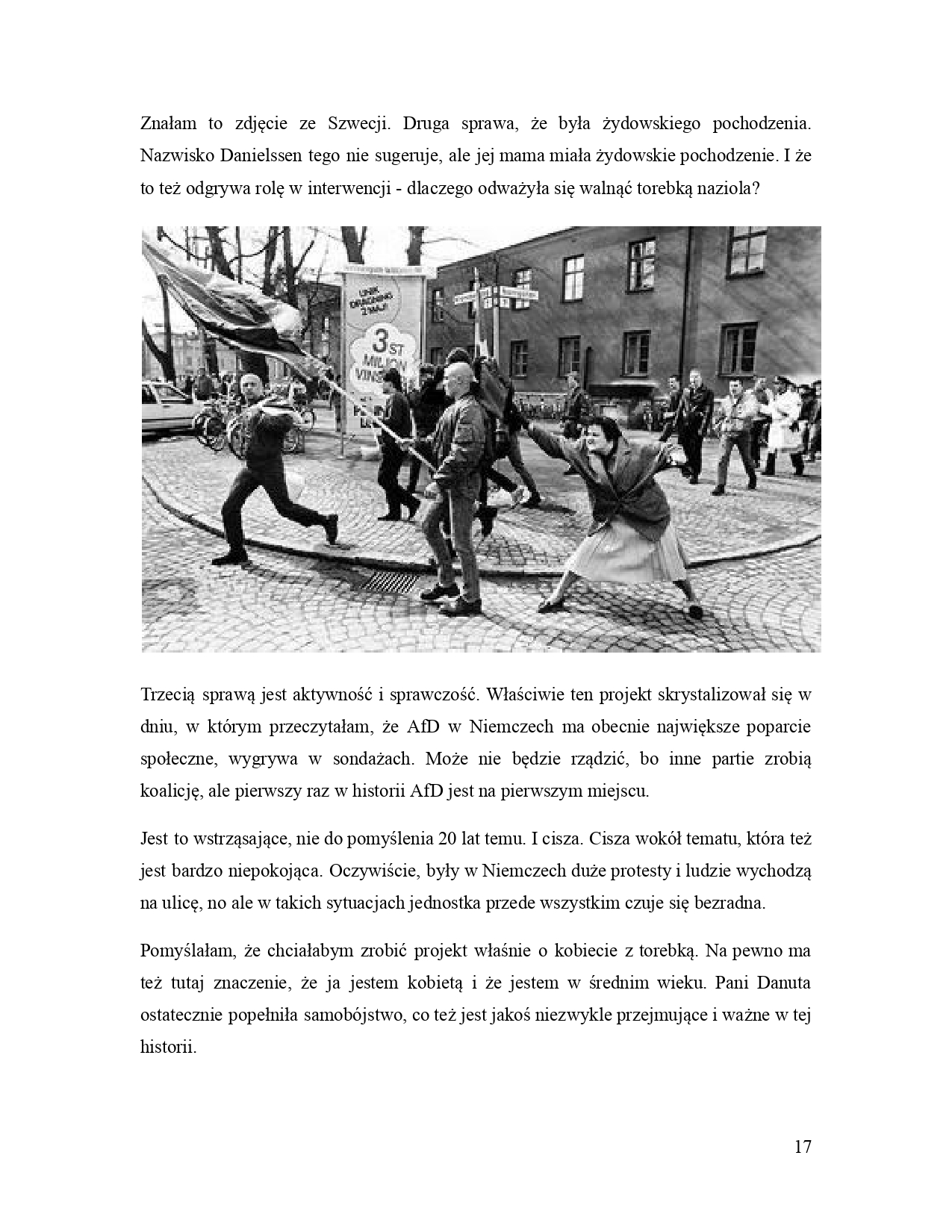
It was also important for me to discover that composing doesn’t appear in my life suddenly, as a distinct activity, but instead begins to permeate the way I think about music, space, and collaboration in general. In new projects, original ideas naturally began to take root — a need to create my own structures and a distinct musical language. The project “Purse Attack,” in collaboration with NeoQuartet and Artur Zagajewski, the “Willow” concept developed together with Zofia Neugebauer, and the first conversations about scoring Maciej Siembieda’s book Gołoborze were all proof to me that I’m beginning to think about music differently than before — not only as an interpreter of existing works, but also as someone co-creating a sound world from the ground up.
An enormously important element of the WOK residency was also the experience of support free of transactionality. In daily life I function in many roles at once, and almost every one of them comes with responsibility toward other people, institutions, or projects. Here, for the first time in a long while, I found a space where I was supported — not to become more productive or effective, but to hear my own voice and take it seriously. It was precisely this support that allowed me not only to develop my work as a composer, but also to take full responsibility for it.
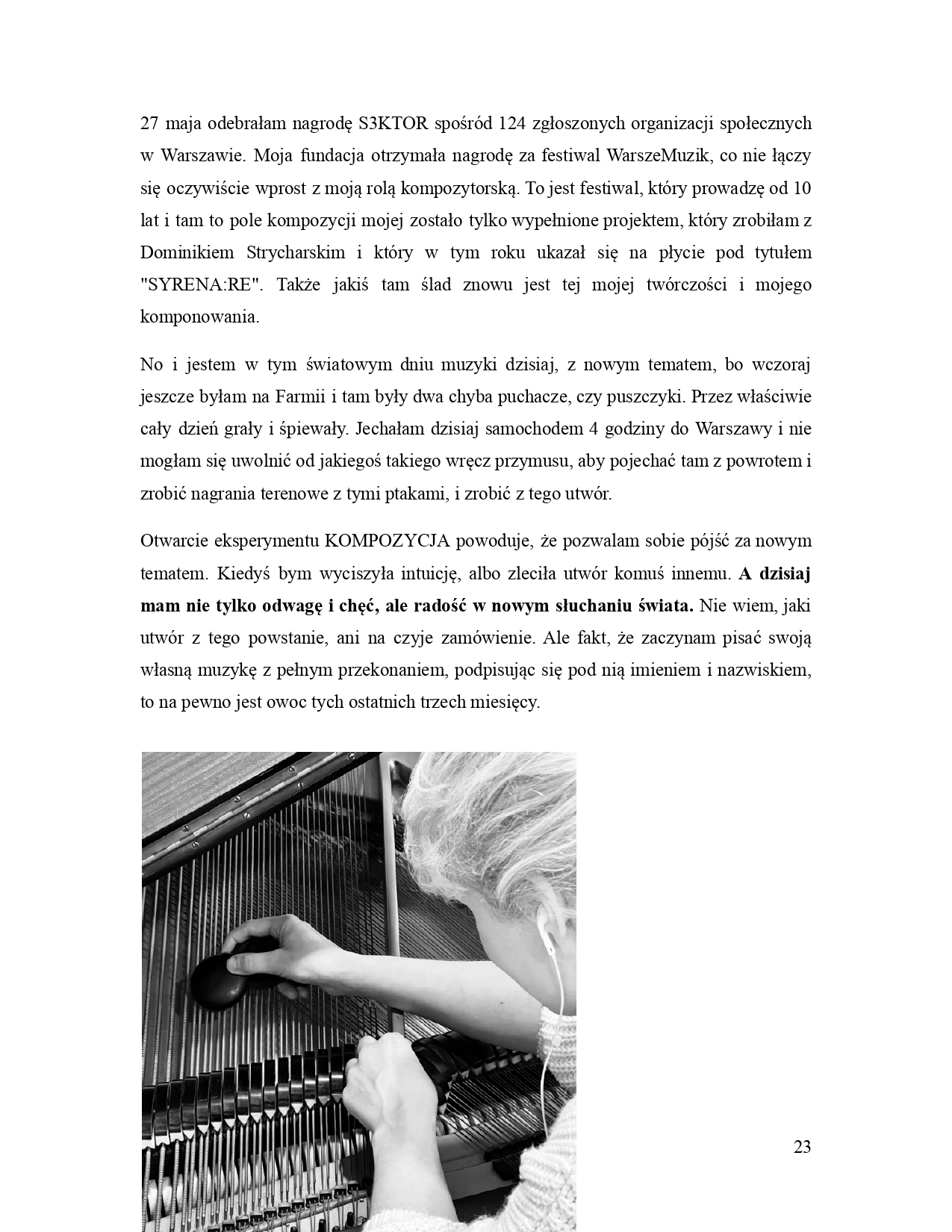
The results of the residency include two new compositions, the ZAiKS registration of my earlier works, preparing an instrument for recording my own music, conducting conversations with young women composers, and starting several new artistic projects combining performance and composition. But what mattered most to me was something harder to measure: a change in the way I listen to the world and to myself. I feel that since the residency I allow myself to follow my intuition much more boldly. I’m beginning to hear music where before there only appeared an idea for interpretation. And for the first time in many years, I feel that I am truly opening a new chapter in my artistic path.